
The Confusion That Launched a Thousand Serums
Walk into any skincare aisle or scroll through five minutes of TikTok and you’ll hear two phrases on repeat: barrier repair and hydration. They’re often used interchangeably, tossed together in product copy as if they describe the same phenomenon. They don’t. Conflating them is one of the most common reasons people spend real money on real products and still wake up to tight, flaky, irritated skin.
The distinction matters more than most people realize, and it starts with understanding what your skin is actually built to do.
Two Different Problems, Two Different Mechanisms
Your skin’s outermost layer the stratum corneum functions less like a simple wall and more like a carefully engineered membrane. It’s composed of flattened dead cells (corneocytes) embedded in a lipid matrix made up of ceramides, cholesterol, and fatty acids. This structure controls two things simultaneously: it keeps water inside your skin from evaporating, and it keeps environmental aggressors, irritants, and pathogens out.
Barrier damage is structural. Something has disrupted that lipid matrix over-exfoliation, harsh surfactants, prolonged sun exposure, certain medications, or simply genetic predisposition. When the barrier is compromised, water escapes faster than it should. That’s called transepidermal water loss, or TEWL, and it’s measurable. You can have perfectly adequate water content in your skin cells and still lose it continuously if the barrier isn’t holding it in.
Dehydration, on the other hand, is about water content. Your skin cells themselves are lacking water. This can happen even when the barrier is structurally intact especially if you’re not drinking enough water, living in a dry climate, or using products that pull moisture out rather than locking it in.
One is a leak in the roof. The other is a shortage of rain. Patching the roof won’t make it rain, and rain won’t fix a leaking roof.
Why Your “Hydrating” Routine Might Be Making Things Worse
Here’s where a lot of well-intentioned skincare routines go sideways. Someone notices their skin feels dry and tight. They reach for a hyaluronic acid serum because hydration, right? They apply it, feel a brief moment of relief, and then an hour later their skin feels just as dry. Sometimes drier.
Hyaluronic acid is a humectant. It draws water toward itself, which sounds ideal until you factor in one variable: it pulls from whatever water source is nearest. In a humid environment, it pulls from the air. In a dry environment or on a compromised barrier, it pulls from deeper layers of your skin. Without an occlusive or film-forming ingredient layered on top to seal that moisture in, you’ve essentially created a fast lane for water to escape through a leaky barrier.
The fix isn’t to stop using hyaluronic acid. The fix is to understand what it needs to work correctly and to recognize that if your barrier is damaged, no amount of moisture-attracting ingredients will solve the underlying problem.
Reading Your Skin’s Signals
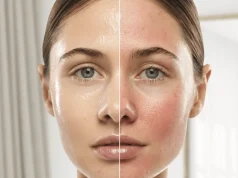
Skin that needs barrier repair tends to give specific signals, and they’re different from plain dehydration. Stinging or burning when you apply products even gentle ones is a classic indicator. So is redness that appears without obvious cause, persistent flakiness that doesn’t respond to moisturizer, and a sensation some people describe as “reactive” skin that seems to have no tolerance for anything new.
Dehydrated skin, in contrast, often shows fine surface lines that appear when you gently press the skin together lines that aren’t wrinkles but look like crumpled paper. The skin can feel tight after cleansing but not necessarily sensitive or reactive. It tends to look dull rather than red or irritated.
The two conditions can absolutely coexist, which is why this gets complicated. A damaged barrier causes accelerated water loss, which causes dehydration, which makes the barrier harder to repair. It’s a cycle, and recognizing which came first helps you break it more effectively.
What Barrier Repair Actually Requires
Repairing the barrier means giving your skin the raw materials it lost. The lipid matrix is primarily ceramides, cholesterol, and fatty acids and research suggests these three work best when delivered in roughly the ratio they occur in healthy skin. Products that provide ceramides alone, without the supporting cast, tend to underperform compared to formulations that include all three.
Niacinamide has earned its reputation here because it actually stimulates ceramide synthesis from within it’s not just sitting on top of the skin but communicating with the cells beneath. Fatty acids, particularly linoleic acid and oleic acid, serve as both barrier components and signaling molecules. Petrolatum deeply unsexy, the stuff of drugstore Aquaphor remains one of the most effective occlusives available because its molecular structure physically seals the skin surface against water loss.
What barrier repair doesn’t require: more exfoliation, more active ingredients, more steps. In fact, one of the most effective things you can do for a damaged barrier is subtract. Strip the routine back to a gentle cleanser, a ceramide-rich moisturizer, and an occlusive at night. Give the skin less to react to while it rebuilds.
The Hydration Layer and How It Actually Works
Once the barrier is functional or if your barrier was never the problem then hydration becomes meaningful. This is where humectants genuinely shine. Hyaluronic acid, glycerin, panthenol, sodium PCA these ingredients draw water into the skin cells and help them maintain volume and elasticity. Glycerin in particular is underrated; it’s less buzzy than hyaluronic acid but has a longer track record and works at multiple molecular weights simultaneously.
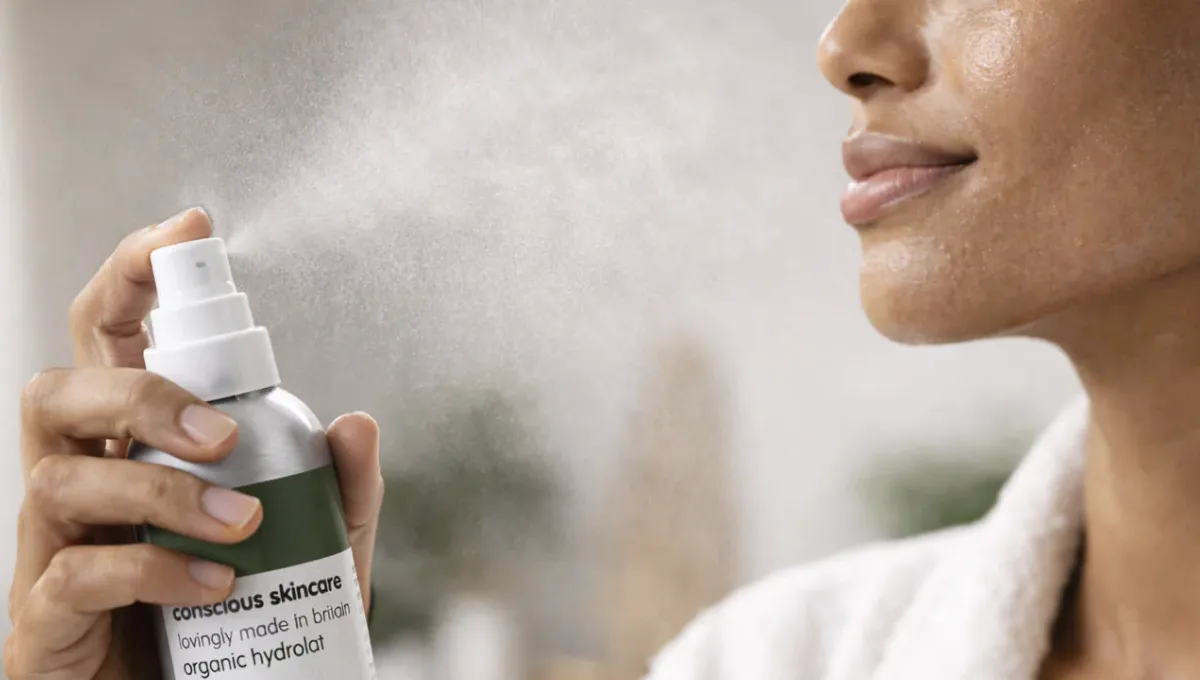
The application sequence matters. Humectants work best applied to damp skin, then sealed in with a moisturizer that contains occlusive and emollient components. Emollients ingredients like squalane, shea butter, or jojoba oil fill in the microscopic gaps between skin cells and smooth the texture. Occlusives form the top seal. Think of it less like a product routine and more like a layering system with a specific physical logic.
One thing worth noting: some people with genuinely oily skin still experience dehydration, because sebum production and water content are controlled by different mechanisms. Oil-rich skin that’s also dehydrated will often overcompensate with more oil production the body’s attempt to compensate for water loss. Treating that dehydration doesn’t mean adding rich, heavy creams; it means using lightweight humectants and a non-comedogenic sealing layer.
When the Two Questions Converge
There’s a particular skin profile that gets the most confusing advice: chronically sensitive, combination-to-dry, reactive skin that’s simultaneously dehydrated and barrier-compromised. This person has tried every “barrier repair” cream and every “intense hydration” serum and comes away feeling like their skin defies logic.
What they usually need is sequence, not quantity. Repair the barrier first simplified routine, lipid-rich ingredients, minimal actives and let that take hold over two to four weeks. Then, once the foundation is stable, introduce hydration-focused ingredients. The mistake is trying to address both simultaneously with a complex, multi-step routine that overwhelms compromised skin with ingredients before it’s ready to process them.
Context matters too. Seasonal changes, travel, stress, hormonal fluctuations all of these shift what your skin needs, sometimes week to week. A routine built for humid summer conditions can actively damage a barrier in dry winter air. The same face can need fundamentally different things depending on where you are in the month.
Beyond the Product Mindset
There’s something worth sitting with here. The skincare industry benefits enormously from the blurring of these two concepts, because confusion drives purchases. If you can’t tell whether you need barrier repair or hydration, you buy both. And then the thing that claims to do both. And then the one that layers on top.
Real skin health tends to be quieter and cheaper than the narrative suggests. A compromised barrier often needs less, not more. A dehydrated skin often needs water actual water, consumed as much as it needs a serum. The products are tools, and tools are only useful when you’ve correctly identified what you’re building.
Knowing the difference between a structural problem and a resource problem won’t make skincare simple, exactly. But it will make your choices more deliberate and your skin, eventually, more predictable.