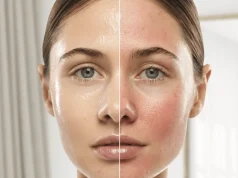

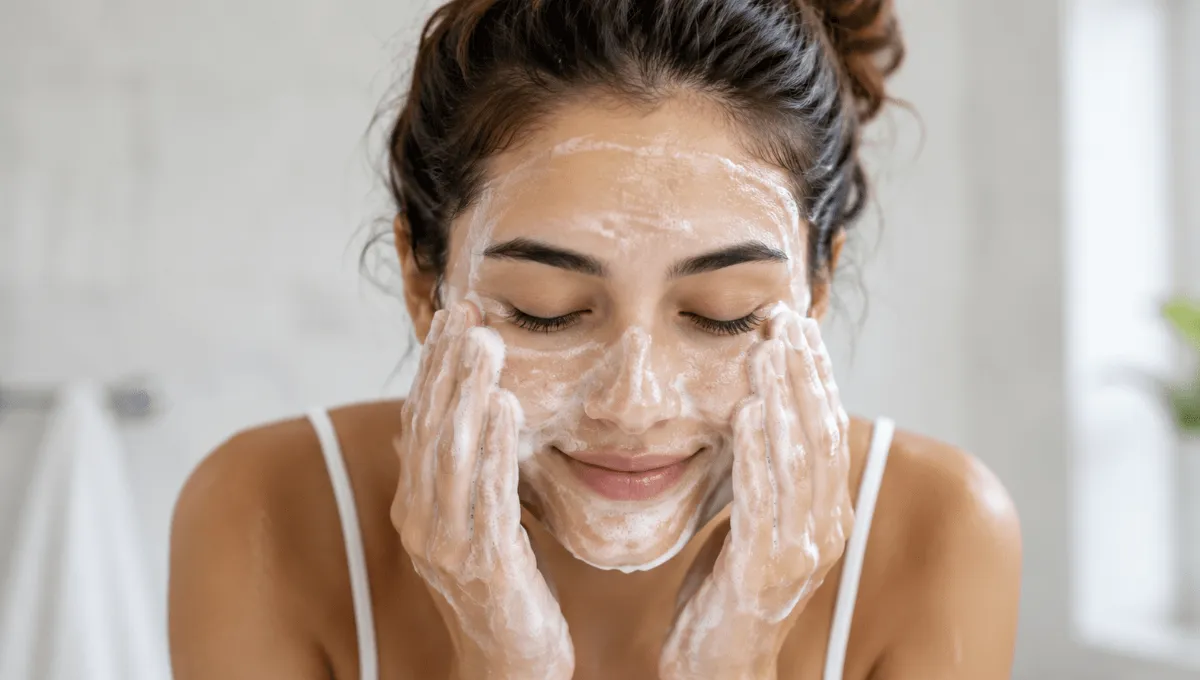
There’s a particular kind of person who washes their face three times a day and still feels like their skin is failing them. They’ve tried every cleanser on the market the foaming ones, the gel ones, the charcoal ones promising to “draw out impurities” like some kind of facial exorcism. Their bathroom shelf looks like a skincare laboratory. And yet: redness, tightness, breakouts that never fully go away. The cruel irony is that the obsessive cleaning ritual isn’t fixing the problem. In many cases, it is the problem.
We live in a culture that has conflated cleanliness with health, and nowhere is this more visible than in the skincare industry. The idea that skin needs to be scrubbed, purified, and stripped of every trace of oil has been sold to us so effectively that questioning it feels almost transgressive. But dermatologists have been quietly sounding the alarm for years, and the science is starting to catch up with what many of them already suspected: over-washing your face doesn’t just fail to help it actively disrupts the very systems your skin depends on to stay healthy.
Your Skin Has a Working Ecosystem and You Might Be Destroying It
The outermost layer of your skin, the stratum corneum, is not just a passive wrapper. It’s a sophisticated biological barrier composed of dead skin cells embedded in a matrix of lipids ceramides, fatty acids, cholesterol that work together to seal in moisture and keep environmental irritants out. Beneath that, the skin maintains its own microbiome: billions of bacteria, fungi, and other microorganisms that coexist in a carefully balanced relationship with your immune system.
When you over-cleanse, you don’t just remove dirt. You strip away the lipid barrier. You alter the pH of your skin’s surface, which typically sits around4.5 to 5.5 slightly acidic, a condition that keeps harmful bacteria in check and helps the microbiome thrive. Most cleansers, even mild ones, are more alkaline than your skin. Use them too frequently, and you’re repeatedly throwing that balance off.
The body responds by going into overdrive. Sebaceous glands, sensing the sudden depletion of surface oils, ramp up production to compensate. This is the paradox that catches so many people off guard: washing your face more doesn’t reduce oiliness. It often makes it worse. The skin produces more sebum to make up for what was stripped away, and that excess oil now sitting on a compromised, slightly inflamed surface becomes a far better environment for acne-causing bacteria than your original, unwashed skin would have been.
The Rise of the Skin Barrier as a Concept
It wasn’t long ago that “skin barrier” was technical jargon confined to dermatology textbooks. Now it’s on product packaging, in TikTok videos, and in the mouths of aestheticians everywhere. This shift is worth paying attention to, because it signals a genuine change in how we understand skin health even if the marketing around it has gotten thoroughly out of hand.
The concept matters because it reframes the entire goal of skincare. If healthy skin is skin with an intact, functioning barrier, then the metric of success is no longer how squeaky-clean your face feels after washing. That tight, taut sensation that many people associate with a “good clean”? Dermatologists have a less flattering name for it: barrier disruption. It means you’ve washed away too much. The skin shouldn’t feel stripped. It should feel like skin.
This reframe has real consequences for how often you should be cleansing. The general consensus among skin specialists has moved toward once daily typically in the evening as sufficient for most people. Morning washing, for those without oily or acne-prone skin, may be entirely unnecessary. Overnight, your face hasn’t been exposed to pollution, makeup, or sunscreen. A gentle rinse with water is often more than adequate.
When Clean Becomes a Compulsion
There’s a psychological dimension here that doesn’t get talked about enough. For some people, the drive to cleanse goes beyond skincare routine into something that resembles compulsive behavior. The skin never feels quite clean enough. There’s always another layer of perceived dirt or oil or impurity to remove. Each wash brings brief relief, followed by the same creeping discomfort, which triggers the next wash.
This pattern has a name in clinical literature it falls within the broader spectrum of body-focused compulsive behaviors but it exists in much milder, far more socially normalized forms that don’t necessarily rise to the level of a diagnosable condition. The skincare industry has been exceptionally good at cultivating this low-grade anxiety, because anxious consumers are loyal consumers. If your skin never quite reaches the standard the advertising sets, you’ll keep buying.
Acne sufferers are particularly vulnerable to this trap. When breakouts appear, the instinctive response is to clean more aggressively, to treat the skin as if it were dirty and contaminated. But the relationship between hygiene and acne is far more complicated than that framing suggests. Acne is primarily a hormonal and inflammatory condition. It is not, in any meaningful sense, a cleanliness failure. Treating it like one doesn’t just fail to work it can make the inflammation significantly worse.
What the Ingredient Labels Aren’t Telling You
Walk down any pharmacy skincare aisle and you’ll notice that the language on cleansers leans heavily into subtraction: removes, clears, eliminates, purifies. Very few products advertise what they’re leaving behind. But what a cleanser preserves matters as much as what it removes.
Sulfates particularly sodium lauryl sulfate and sodium laureth sulfate are among the most common surfactants in cleansers, and among the most disruptive to the skin barrier. They’re effective at cutting through oil, which is exactly why they’re so popular, and exactly why they’re a problem when used daily on facial skin. The same property that makes them excellent degreasers makes them hard on the lipid matrix holding your barrier together.
Fragrance is the other quiet troublemaker. It appears in a staggering number of skincare products, including ones marketed as “gentle” or “sensitive skin” formulas, and it’s one of the most common sources of contact dermatitis. The irritation it causes is often slow and cumulative, building over weeks or months until the skin becomes reactive to things it previously tolerated without issue.
The irony is that people often cycle through product after product looking for what’s breaking them out, not realizing the cleanser they’ve used every single day for two years is the consistent variable undermining everything else.
The Quiet Argument for Doing Less
There’s a counterintuitive principle that runs through a lot of what dermatologists recommend for compromised or reactive skin: the first intervention isn’t adding something. It’s stopping things. Stop the twice-daily washing. Stop the exfoliating acid three nights a week. Stop layering serums whose ingredients may be actively conflicting with each other. Give the skin a few weeks of genuine rest and minimal intervention, and a remarkable number of people find their issues resolve without any new product at all.
This is deeply unsatisfying advice in a market built on selling solutions. It doesn’t generate content. It doesn’t require a shopping cart. But the skin, left to its own devices with modest, respectful support, is genuinely good at healing itself provided you stop repeatedly pulling therug out from under it.
The face you’re trying to achieve through elaborate ritual might actually be accessible through subtraction. Less frequency. Less product. Less faith in the idea that cleaner is always better.