

Why Your Outfit Feels “Off” Without Good Accessories
The Invisible Architecture of a Great Look
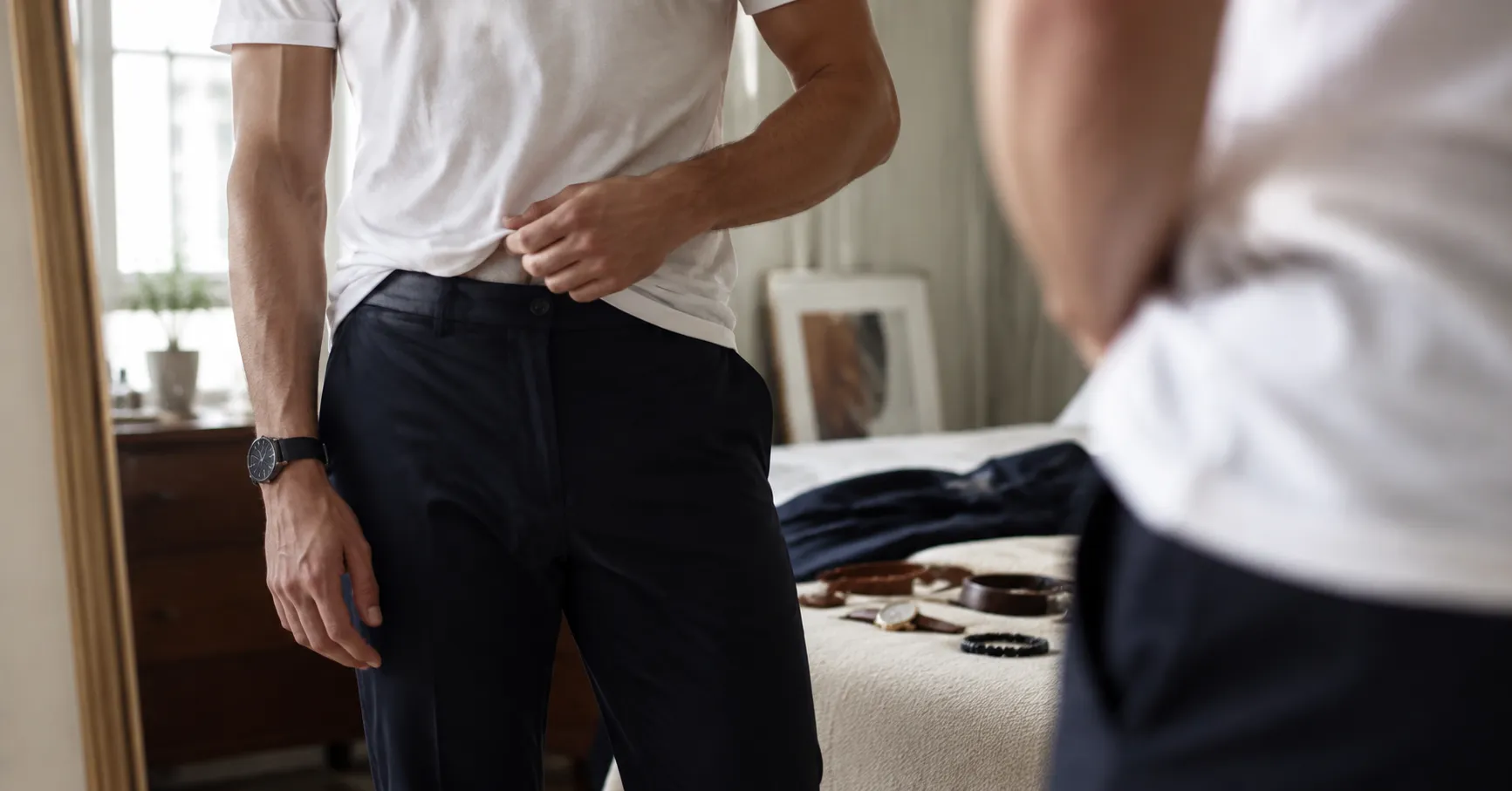
There’s a particular kind of frustration that happens when you’re standing in front of a mirror, fully dressed, and something just doesn’t feel right. The clothes are clean. They fit well. The colors don’t clash. And yet the whole thing reads as unfinished, somehow flat, like a sentence missing its punctuation. You swap out the top. You try different shoes. But the problem wasn’t the clothes at all.
It was the absence of accessories.
This is one of the least-talked-about dynamics in personal style, mostly because accessories sit in a strange cultural category. They’re treated as extras things you add when you’re feeling fancy or when you have time. The “real” outfit is the clothing. Accessories are garnish. That thinking is exactly why so many people dress well on paper and still feel like something’s off in practice.
Accessories are not garnish. They’re structure.
What the Eye Actually Processes
When someone looks at you, they don’t consciously analyze each item you’re wearing. The eye processes the whole field, picks up on contrast, proportion, weight distribution, and visual rhythm. What reads as “polished” or “put together” is actually your brain detecting a certain coherence in those invisible variables.
Clothes, on their own, rarely complete that picture. A well-cut blazer has great structure, but it terminates at the collar. There’s nothing to draw the gaze upward, nothing to anchor the wrist, nothing to create a counterpoint at the waist. What you’re seeing is a shape a competent shape, maybe but not a composition.
Accessories supply the compositional logic. A watch introduces visual weight at the wrist. A necklace creates a focal point that pulls the eye toward the face. A belt defines the waist in a way that even a fitted shirt can’t fully achieve on its own. A bag creates a diagonal line across the body, breaking up monotony and introducing movement. These aren’t aesthetic whims. They’re structural interventions.
The Proportion Problem Nobody Names
Here’s something most style advice skips: accessories work on proportion in ways that are almost optical-illusion level. The right earrings can elongate the face. A chunky bracelet on a narrow wrist rebalances the visual weight of a flowing dress. A long pendant necklace draws the eye down and creates the illusion of height. A belt on a boxy silhouette suddenly makes the same garment look intentional instead of shapeless.
The inverse is just as instructive. Think about a beautifully draped maxi skirt paired with a simple linen top elegant in theory. Without any accessories, the outfit can read as pajamas. Add a pair of sculptural earrings and a minimal leather sandal, and suddenly the whole thing snaps into focus. The clothes didn’t change. The proportional context did.
This is why “the clothes should speak for themselves” is true only up to a point. Even the most beautifully constructed garment exists in physical space on a three-dimensional body. Accessories are what translate flat, tailored fabric into something that lives and moves coherently.
The Signal Problem
Beyond the visual mechanics, accessories communicate in a way that clothing alone often can’t. Clothes establish category formal, casual, professional, relaxed. But within any category, the variation in accessories is what signals specificity, intentionality, personality.
Consider two people at the same dinner party, both wearing dark slim trousers and a white shirt. One is wearing white sneakers and a clean minimal watch. The other has on loafers, a vintage silk scarf tucked at the neck, and a stacked set of thin gold rings. They’ve communicated entirely different things about who they are without saying a word, and they’re wearing essentially the same clothes.
This is where accessorizing stops being about aesthetics and starts being about self-authorship. The pieces you choose and more importantly, the pieces you reach for without thinking are the unconscious signature of your taste. People who feel confident in how they dress almost universally have a relationship with a small set of accessories that feel native to them. Not a vast collection, just a working vocabulary. A go-to watch. A specific kind of bag. A ring they never take off. These aren’t arbitrary attachments; they’re anchors.
The “I Have Nothing to Wear” Feeling, Decoded
That specific despair of standing in front of a closet full of clothes and feeling like you have nothing to wear? It’s rarely about the clothes. It’s almost always about a missing bridge. You have tops and you have bottoms and you have shoes, but nothing to tie them into a coherent whole.
Accessories are that bridge. They’re the connective tissue between individual garments. A scarf can marry a printed skirt to a solid sweater that would otherwise feel visually disconnected. A structured bag can elevate an entirely casual outfit into something that reads as intentional. Jewelry can soften a hard-edged leather jacket or add edge to a soft floral dress.
The reason accessories get ignored is that building a wardrobe tends to be taught as a clothes-first project. Buy the basics. Invest in quality pieces. Build a capsule. What’s almost never said is that a capsule wardrobe without a corresponding set of accessories is an unfinished sentence. You’ve got the vocabulary; you’re missing the grammar.
On Learning to See It
There’s a useful exercise that a lot of stylists use with clients who feel stuck: take an outfit you wear regularly and photograph it, then photograph the same outfit with one or two accessories added. Don’t overthink the addition just grab whatever feels instinctively right. The difference in the photos is almost always striking. Not because the outfit was bad before, but because the accessories create the sense of completion that the eye was waiting for.
What makes this revealing isn’t just the visual result. It’s what it teaches about the role of small things. A thin gold chain. A watch with the right case size. A bag that hits the hip at exactly the right point. A scarf looped loosely at the collar. None of these items would make sense described out of context, but in place they perform a quiet, essential function.
The instinct to dismiss accessories as secondary as optional finishing touches for people who care too much misunderstands how visual communication actually works. We don’t see things in isolation. We see relationships between things. And accessories are, more often than not, the relationship-makers.
The Ones That Stay
The best accessories don’t announce themselves loudly. Over time, the pieces that earn a permanent place in someone’s wardrobe tend to be the ones that quietly upgrade everything around them the ring that makes your hand look interesting when you’re gesturing in a meeting, the bag that’s traveled so many places it’s accumulated a kind of presence, the watch you forget you’re wearing until someone asks about it.
That quality of being quietly essential functional but resonant, present but not dominating is harder to find than most people expect. Which is perhaps why, when you do find those pieces, you reach for them every day. Not out of habit, exactly. More like recognition.