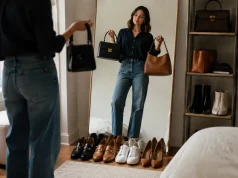

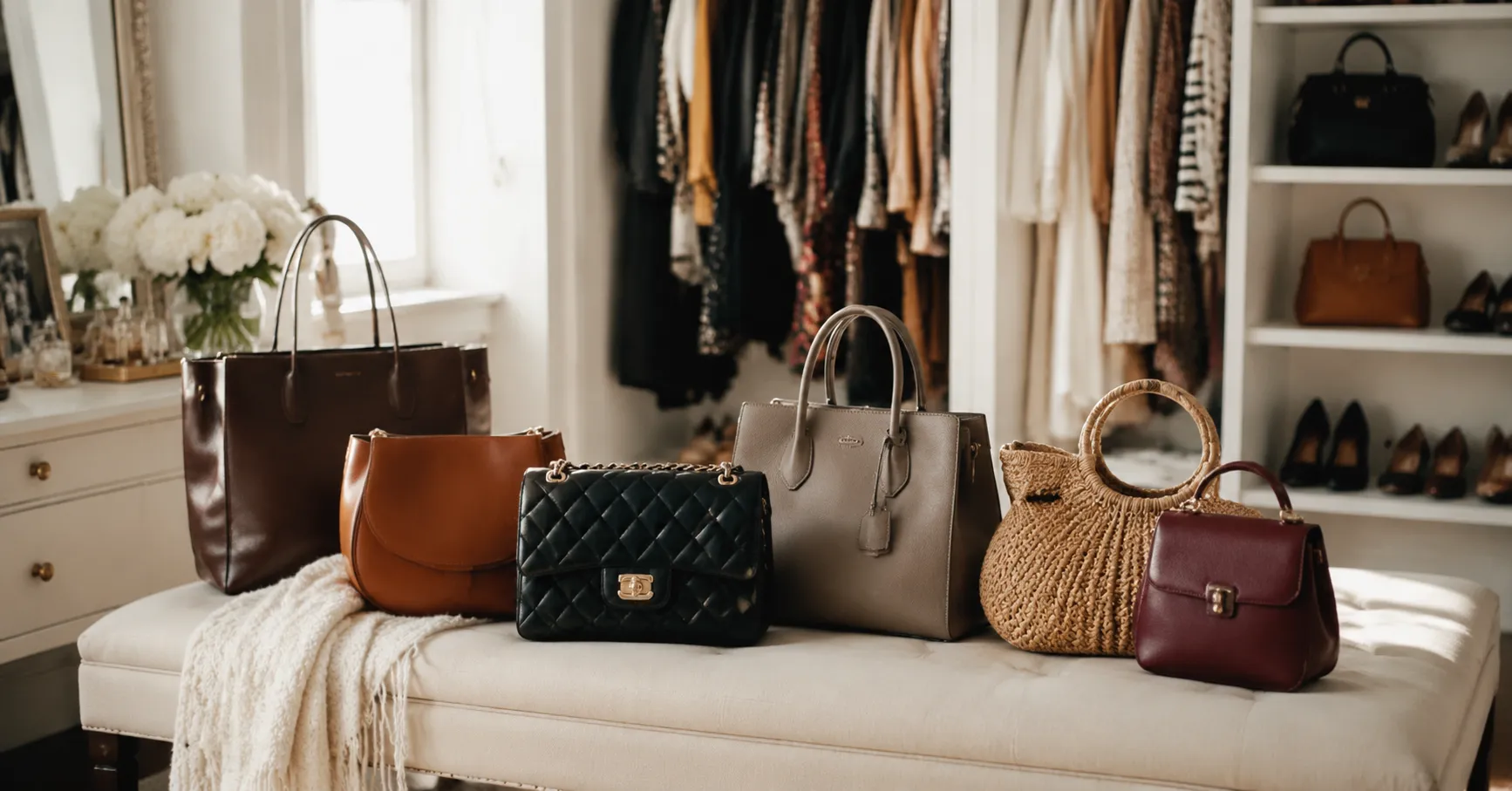
There’s a moment most women recognize standing in front of a closet full of clothes, feeling like they have nothing to wear, yet reaching instinctively for the same bag. Not because it matches. Not because it’s practical. Because it feels like them. That instinct is worth examining.
The handbag has never been purely functional. Even in its earliest iterations the drawstring pouches of medieval Europe, the ornate chatelaines clipped to Victorian waistbands the bag carried social meaning alongside its contents. It told observers something about the woman’s station, her sensibility, her relationship to beauty and utility. That hasn’t changed. If anything, the language has grown more nuanced and more personal.
The Tote Carrier: Practicality as Philosophy
Ask a tote person why they carry a tote, and they’ll say something like “I just need the space.” But watch them use it. The tote carrier is usually someone who treats life as something to be fully inhabited books, snacks, a spare sweater, three different lip balms, a reusable bag inside the bag. They’re optimists, in a way. They believe today might require resources they haven’t anticipated yet.
There’s also something quietly anti-fashion about the tote. The canvas market bag from a bookshop. The oversized linen tote from a museum gift store. These aren’t status markers in the conventional sense they’re affiliation markers. They signal intellectual identity, cultural taste, a studied indifference to the kind of brand hierarchy that makes other bags expensive. The tote says: I’m not performing for you, but I am very much performing.
This is not a criticism. It’s a recognition that even the rejection of traditional status signaling is its own kind of signaling. And there’s a genuine confidence in it the confidence of someone who doesn’t need the armor of a recognizable logo.
The Mini Bag: Editing as Self-Expression
At the opposite end of the spatial spectrum is the miniature bag barely large enough for a phone, a card, and a key if you’re lucky. The mini bag represents a particular kind of discipline, or at least an aspiration toward it. Carrying one requires a decision: what actually matters right now?
People who gravitate toward small bags tend to either live very streamlined lives or are deeply committed to the aesthetic of streamlined living, which is a slightly different thing. Either way, there’s a declarative quality to the choice. The mini bag says: I travel light. I am not burdened. I can leave any room at any moment.
There’s also a playfulness to it the tiny quilted crossbody in a pop of color, the micro bucket bag in pebbled leather. Mini bags often have a boldness of design that larger bags don’t need. When the form itself is a statement, the details matter more. Wearers of mini bags are frequently people who enjoy fashion as pleasure rather than armor, who have a genuine delight in the absurdity of a three-inch clutch being a functional life choice.
The Structured Bag: The Architecture of Control
Then there’s the person who carries a bag that holds its shape. Rigid sides. A frame. A satisfying click-clasp or a turn-lock. These are bags that behave themselves, and so, often, do the people who carry them.
The structured bag a lady bag, a top-handle, a boxy satchel signals a certain orientation toward the world. Things have their place. Presentation matters. There’s something almost architectural in the preference, a belief that good design should be disciplined, that beauty has a relationship with order. Structured bag people often dress with intention. Their outfits are considered rather than thrown together, even when they’re aiming for casual.
It’s easy to read this as rigidity, but that misses something. The devotion to a well-made structured bag is often quietly sensual the feel of stiff leather that will eventually soften, the satisfying weight of a brass closure, the knowledge that this object will outlast trends. These are people who think in terms of quality and longevity. They’re often skeptical of fast fashion, not always on principle, but because something cheap that collapses feels like a small personal insult.
The Crossbody Wearer: Freedom as Aesthetic
The crossbody is the bag of someone who wants their hands free. That’s the functional reason. But function rarely tells the whole story.
Crossbody wearers tend to be people in motion not necessarily physically active in the athletic sense, but psychologically restless, always en route somewhere, engaged with the world rather than observing it. There’s an ease to the crossbody that’s almost democratic. It works with everything because it doesn’t demand to be the point. It lets the rest of the outfit breathe.
This isn’t laziness about style it’s a particular kind of style philosophy where versatility is the virtue. The person who reaches for a worn leather crossbody every single day has likely made peace with the idea that consistency is its own form of elegance. They’re not chasing newness. They found their thing.
The crossbody also has a certain urban romance to it the image of someone walking through a city with their hands in their pockets and a bag slung across their body, unencumbered, available to the world. It’s the bag of someone who trusts the day.
The Logo Bag: Visibility Is the Point
This one generates the most cultural debate, and the debate is usually dishonest. The logo bag whether it’s the interlocking C’s of Chanel, the LV monogram, the Gucci GG canvas is frequently dismissed as shallow or status-obsessed. But that reading is too simple and, frankly, a bit classist.
For some wearers, the logo bag is about aspiration made tangible. The first designer bag saved for over years, bought not because someone told them to but because they wanted to hold something beautiful that also said: I arrived. For others, it’s about community a visual shorthand for membership in a particular world of taste and access. For others still, it’s just genuinely about the craft. Some of those bags are extraordinary objects. The logo is a side effect, not the motivation.
What unites logo bag wearers is comfort with visibility. They’re not interested in stealth wealth that particular form of conspicuous inconspicuousness that requires insider knowledge to decode. They’re comfortable being read. They’re okay with people knowing what they chose and what it cost. That’s actually a form of directness.
The Vintage Find: Time as Material
There’s a different conversation entirely for the person who carries something old. Not necessarily expensive vintage maybe a geometric 1970s frame bag from an estate sale, or a boxy shoulder bag in a color that hasn’t been fashionable since1988. These wearers are often the most deliberate of all.
The vintage bag signals a rejection of the contemporary retail cycle and an appetite for objects with history. It suggests someone who thinks about where things come from, who finds pleasure in the detective work of identifying an era or a maker, who wants their possessions to have accumulated meaning rather than just price tags.
There’s also something emotionally interesting about choosing an object that has already lived. It implies a comfort with imperfection, with wear, with the evidence of time. The slight scuff on the corner, the faded lining these aren’t flaws to be hidden but proof that the object endured.
When the Bag Doesn’t Match the Narrative
The most honest thing to say about all of this is that most people contain contradictions. The corporate lawyer who carries a giant canvas tote covered in cartoon fruit. The minimalist who has one deeply impractical micro bag she wears to dinner parties because it makes her laugh. The practical crossbody person who keeps a very serious structured bag at the back of her closet for the days she needs to feel formidable.
The bag you carry most often is probably your true self. But the bag you reach for when you’re trying to become someone slightly different that one is interesting too.
Style, at its most honest, is a negotiation between who you are and who you’re reaching toward. The handbag sits right in the middle of that conversation, every single day, completely silent, saying everything.