
There’s a quiet revolution happening at the intersection of wealth and restraint. It doesn’t announce itself with monograms or interlocking initials. It doesn’t need to. The people driving this shift have already arrived and they’d rather you didn’t notice.
The no-logo movement in luxury fashion isn’t new, exactly. But the speed at which it has colonized the upper tiers of the market, and the particular cultural moment it reflects, makes it feel genuinely disruptive. What used to be a niche preference among old-money aristocrats and fashion insiders has become a full aesthetic philosophy one that is reshaping how the most expensive wardrobes in the world are being built.
The Logomania Hangover
To understand where we are, you have to understand where we came from. The late 2010s were peak logomania. Supreme box tees. Gucci’s double-G belt. Balenciaga’s oversized fonts. Louis Vuitton’s monogram canvas on everything from sneakers to sleeping bags. Wearing a logo wasn’t just about brand loyalty it was a social signal, a way of participating in a shared visual language about status and belonging.
The problem with that language is that it eventually becomes available to everyone willing to pay the entry price. And when a Dior saddle bag or a Fendi baguette starts appearing as a near-identical dupe on fast fashion platforms three months after the runway show, the signal loses its exclusivity. The thing luxury consumers are actually buying differentiation evaporates.
So the top of the market did what it always does when the middle catches up: it moved somewhere the middle couldn’t easily follow.
What “No-Logo” Actually Means
It’s worth being precise here, because “no-logo” can be a slippery concept. It doesn’t mean unbranded. It doesn’t mean cheap. In many cases, it means the opposite of cheap prices that would make a traditional logo piece look like a bargain bin impulse buy.
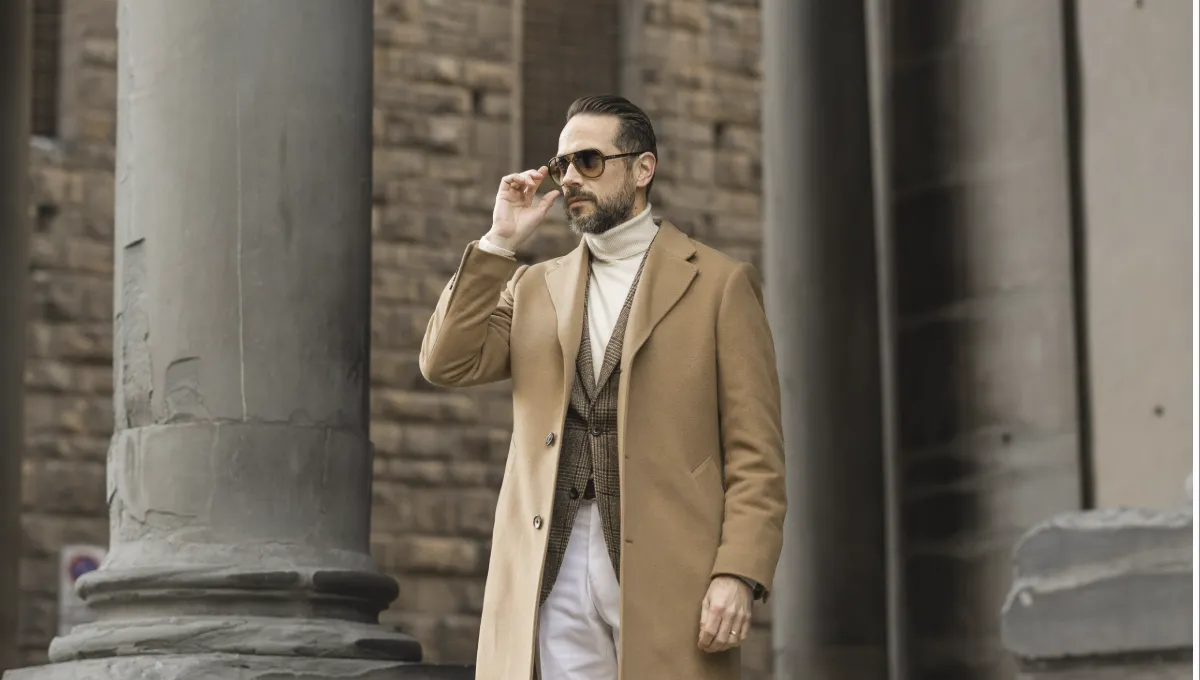
What it means, practically, is that the garment’s value lives in construction, fabric, provenance, and proportion rather than in a visible brand identifier. A $4,000 cashmere coat from Loro Piana has no logo on the outside. Neither does a bespoke shirt from Charvet, a pair of John Lobb shoes, or a ceramic-finish watch from A. Lange & Söhne. The knowledge required to recognize these objects as expensive and to know why they’re expensive is itself the currency.
This is sometimes called “stealth wealth” in the press, a term that captures something real but slightly misses the point. The goal isn’t stealth for its own sake. It’s that the audience has changed. These objects aren’t speaking to strangers on the street. They’re speaking to a much smaller, more specific group of people who already know.
Brands Leading the Quiet Shift
Loro Piana is the brand that gets cited most often in this conversation, and for good reason. The Italian house quietly acquired by LVMH in 2013 has built an entire identity around the conspicuous absence of conspicuous branding. Their customer doesn’t want to be seen trying. They want to be seen wearing something so flawlessly made that trying was never a consideration.
But Loro Piana isn’t alone. The Row, founded by Mary-Kate and Ashley Olsen, has become one of the most influential brands in this space by treating fabric quality and architectural silhouette as its primary language. A The Row blazer communicates nothing to someone who doesn’t know The Row. To someone who does, it communicates a great deal. That asymmetry is the entire point.
Jil Sander under Lucie and Luke Meier has pushed deep minimalism into elevated territory. Brunello Cucinelli has built a billion-dollar business on what he calls “humanistic capitalism,” making clothes that feel expensive through texture and fit rather than branding. Even houses with historically strong logo identities Bottega Veneta, Celine under Hedi Slimane’s predecessor Phoebe Philo have cultivated moments or entireeras defined by the logo’s absence.
The Economics of Recognition Without Signaling
There’s an interesting economic logic at play here that goes beyond fashion trends. The traditional luxury market is built on aspiration people buying objects that signal a life they’re moving toward, or have recently entered. Logo goods serve this market well because the signal is legible across social contexts.
The no-logo market is built on something different: consolidation. These are buyers who no longer need to signal to strangers. Their social proof exists in contexts private clubs, certain dinner tables, the right vacation properties where everyone already knows the score. The clothing is more like a private handshake than a public announcement.
This creates an interesting pricing dynamic. Because no-logo luxury doesn’t benefit from the aspirational market the same way, it can’t rely on volume to the same degree. Its business model depends on holding price with extreme integrity, maintaining radical scarcity, and cultivating a customer who returns because they trust the product not because they’re chasing status validation. Margins need to be high because volumes are intentionally low.
Loro Piana reportedly has waiting lists for certain fabrics. The Row rarely discounts. These aren’t accidents of supply chain they’re deliberate strategies for maintaining the brand’s position as something you earn access to rather than simply purchase.
The Cultural Anxiety Underneath
Fashion doesn’t exist in a vacuum. The no-logo movement has accelerated alongside some specific cultural anxieties that deserve naming.
One is the visibility problem of extreme wealth in an era of widespread economic resentment. When income inequality is a live political issue and “eat the rich” is a sentiment with genuine cultural traction, wearing a $3,000 belt with the brand’s initials spelled out in metal hardware starts to feel less like a flex and more like a target. Discretion becomes a form of social intelligence.
Another is the reaction against what might be called the Instagram-ification of luxury. When a product’s value is measured by how well it photographs against a neutral backdrop for content, something has gone wrong. The no-logo customer or at least the ideology surrounding the no-logo customer represents a rejection of that logic. The coat doesn’t need to perform online. It needs to feel right at four in the morning in a city with cold winters.
There’s also a generational dimension. Younger ultra-high-net-worth consumers, particularly those who grew up watching logo culture peak and then get democratized into oblivion through streetwear collaborations and accessible luxury diffusion lines, are particularly skeptical of visible branding as a form of self-expression. For them, the logo feels borrowed. The quality, they believe, is actually theirs.
The Contradiction at the Center
None of this is entirely clean, and it’s worth sitting with the contradiction. No-logo luxury still involves buying your way into a particular identity. The absence of a logo is itself a signaling strategy one that requires even more cultural capital to decode, which makes it more exclusive, not less hierarchical. Stealth wealth is still wealth. The gatekeeping has just moved up a level.
And there’s something almost aggressively insular about an aesthetic that only speaks to people who already know. It doesn’t invite you in. It doesn’t try to. That exclusion is the product.
The brands that navigate this best seem aware of the tension. Brunello Cucinelli talks openly about making clothes with an ethical relationship to craftsmanship and labor. The Row lets the work speak without much commentary at all. Whether that restraint is a genuine philosophy or an extremely sophisticated marketing position is a question each brand eventually has to answer for itself usually when under financial pressure.
What seems undeniable is that the center of gravity in luxury fashion has shifted, and the shift isn’t simply aesthetic. The most coveted wardrobes right now are being built around objects that trust their owner not to need an explanation. In a world of relentless visibility and constant performance, that kind of quiet confidence has become genuinely rare.
And rarity, as luxury has always understood, is the whole game.