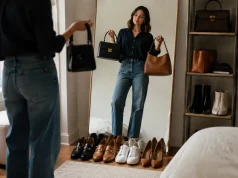

There’s a moment most women know well. You’re standing in front of a mirror, bag in hand, and something feels off not the outfit, not the shoes, but the proportion. The bag is either swallowing you whole or disappearing against your frame like an afterthought. It sounds trivial. It isn’t.
The small bag vs. big bag debate has been cycling through fashion conversations for decades, and it refuses to die because it keeps revealing something true: the bag you carry says more about how you live than how you dress.
Size Is a Lifestyle Argument, Not a Style One
Before we get into aesthetics, let’s be honest about the real question underneath this whole debate. It’s not “what looks better?” It’s “what actually fits your life?”
A small bag forces a kind of discipline. You carry what you need, nothing more. Lip balm, phone, card, keys the essentials stripped down to their most irreducible form. There’s something almost philosophical about it, that act of editing your daily life into a four-inch clutch. Women who swear by mini bags often describe a genuine sense of freedom in it. Less weight on the shoulder. Less rummaging. Less of that low-level anxiety that comes from carrying a bag that feels like a moving office.
But that freedom has a price. The moment you need an umbrella, a notebook, a change of shoes, or an extra layer for the over-air-conditioned restaurant you’re heading to after work the small bag becomes a liability. You start outsourcing your needs to other people, to coat pockets, to “just leaving it in the car.” The bag that was supposed to liberate you has quietly reorganized your logistics.
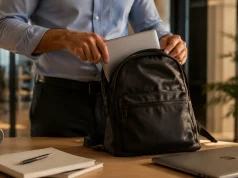
Big bags operate on a different psychology entirely. They’re built on the assumption that life is unpredictable and you should be prepared for it. Anyone who has ever pulled a bandage, a charger, a snack, and a full-sized umbrella out of their tote in a single afternoon knows the quiet satisfaction of being the person who had exactly what was needed. There’s a reason the tote bag became the unofficial symbol of a certain kind of capable, organized woman it holds things, yes, but it also signals readiness.
The downside is real, though. Big bags accumulate. That’s not a character flaw; it’s physics. When there’s space, things fill it. Receipts from three weeks ago. A book you meant to read. Four different lip products when you only ever reach for one. The big bag can quietly become a burden on your shoulder, literally, and on your sense of being put-together.
What Your Proportions Actually Tell You
Fashion advice on bag sizing tends to lean on body proportions, and while this matters, it’s often oversimplified into rules that don’t hold up in real life.
The traditional guidance goes something like this: petite frames should avoid oversized bags that overwhelm, and taller or larger frames can “pull off” bigger bags more easily. There’s some visual truth here a structured oversized tote on a five-foot frame can read as costume-y if worn without intention. But the framing of “pulling something off” is already the wrong way to think about it.
What actually works is understanding visual weight and how you want to distribute attention. A tiny crossbody on a curvy body doesn’t look wrong it can look precise and intentional, drawing the eye upward, creating a specific kind of studied minimalism. Conversely, an oversized tote slouched over the shoulder of a slender frame can look effortlessly editorial or slightly overwhelmed, depending entirely on how the rest of the outfit is constructed.
The more useful question isn’t whether the bag “matches” your body type. It’s whether the bag anchors or disrupts the visual story you’re telling.
The Occasion Gap Nobody Talks About
Here’s where a lot of bag decisions go sideways: people try to find one bag that works everywhere. It doesn’t exist.
A structured mini bag in buttery leather might be the most elegant thing you own, but try taking it to a farmer’s market on a Saturday morning and it reads as oddly formal. A roomy canvas tote is perfect for that same Saturday, but bring it to a dinner reservation and suddenly you’re the person holding the bag that’s more “grocery run” than “evening out.”
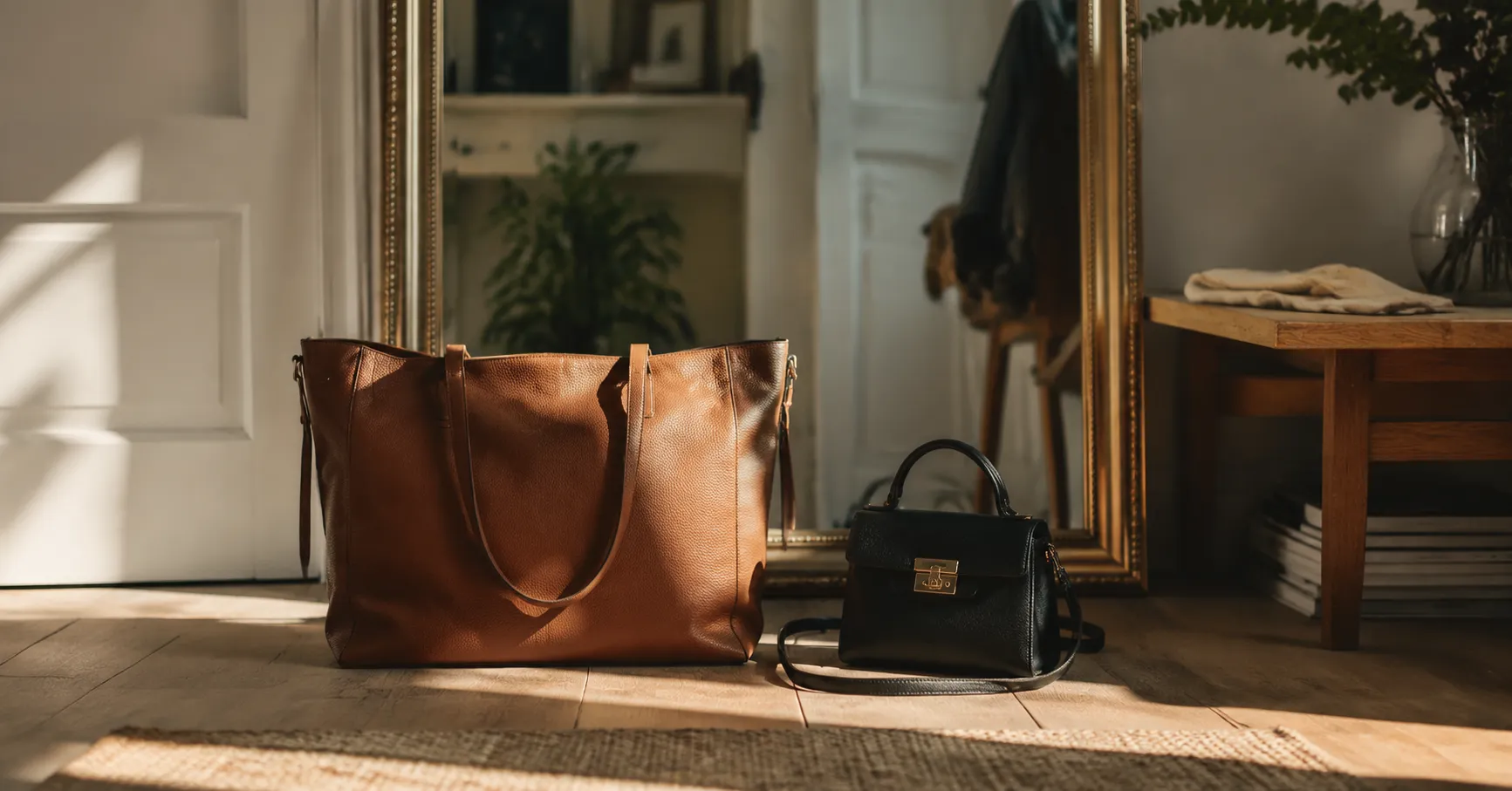
The occasion gap is real, and the women who navigate bag sizing best tend to be the ones who have stopped trying to solve it with a single piece. They have a small bag for evenings, something medium-sized for daily errands and work, and a large tote or structured carryall for travel and weekends that demand more. This isn’t about owning more it’s about being honest that different contexts have genuinely different needs.
That said, the crossbody sits in a peculiarly versatile sweet spot. A medium-sized crossbody not the tiny going-out version, not the oversized messenger handles more situations than almost any other silhouette. It keeps your hands free, distributes weight well, fits enough for a full day, and works across casual and semi-formal settings in a way that feels almost unfair compared to how hard every other size has to work.
The Trend Trap and How to Sidestep It
Every few seasons, one end of the spectrum dominates. The micro-bag trend of the late 2010s pushed bags to almost satirical smallness pieces that could barely hold a folded bill, sold at prices that implied the impracticality was the point. Then the pendulum swung back toward oversized, utilitarian silhouettes, with giant totes and structured top-handles big enough to pack for a weekend trip.
Following these trends isn’t wrong, but it helps to know why you’re following them. Are you drawn to the micro bag because you genuinely live a light, mobile life and the aesthetic resonates? Or are you buying it because it looked incredible in an editorial and you’re hoping the rest of your life will somehow conform? The bag that looks perfect in a photo often lives a very different life once it’s yours.
The more durable approach is to start from your actual day the specific Tuesday or Saturday you live, not a stylized version of it and work backward to the size. How many hours will you carry it? What do you never leave the house without? How do you feel physically after a long day with something heavy on your shoulder? These aren’t romantic questions, but they lead to choices you’ll actually be glad you made.
When the Small Bag Wins
There are contexts where the small bag doesn’t just work it’s the right answer in a way that feels almost inevitable.
Evening events and formal occasions are the obvious ones. A small clutch or evening bag removes bulk from the silhouette, keeps the focus on the outfit, and communicates that you’ve arrived somewhere specific and intentional, not passed through on the way to somewhere else.
Travel, surprisingly, is another. Not for carrying everything that’s still the big bag’s territory but a small crossbody worn on top of a larger travel bag handles the airport, the museum, the day excursion in a way that a full-sized tote simply can’t. You can zip it, sling it, and move without worrying.
And sometimes it’s just about mood. There are days when carrying less feels like a deliberate choice, a kind of permission to move through the world with less cargo, emotional as much as physical.
When the Big Bag Earns It
The big bag has been maligned by minimalism culture in a way that’s a little unfair.
A well-organized large bag carried intentionally is one of the most functional objects in a person’s daily life. Parents, people with long commutes, anyone who moves between multiple environments in a single day the big bag isn’t a failure of editing. It’s a practical tool that happens to also be beautiful when chosen well.
The structured tote in particular has a kind of quiet authority to it. It sits upright. It holds its shape. It communicates that you know where you’re going and you’ve thought about what you’ll need when you get there. That’s not nothing.
The key is the word “intentional.” The big bag that’s dragging behind you, half-open, straps stretched, is a different object than the big bag you’ve packed thoughtfully and carry with a sense of purpose. Same size, completely different impression.
What size bag works for you is, in the end, a question that only makes sense when it’s attached to your actual life not a body type, not a trend cycle, not what looked impossibly chic on someone else’s shoulder. The bag that earns its place in your rotation is the one that disappears into your day, that you stop thinking about ten minutes after you pick it up, that just quietly gets the job done. Sometimes that’s the one you can fit in your coat pocket. Sometimes it’s the one you need two hands to lift. Usually, honestly, it’s both.