

There’s a particular kind of woman or man you’ve probably noticed before. They walk into a room and something about them reads as effortlessly put-together. Polished. The word that usually surfaces, whether you’re consciously thinking it or not, is expensive. But here’s the thing: half the time, they’re not. What they’ve mastered is something entirely different from wealth. They’ve mastered the visual grammar of it.
That distinction matters more than people admit. Looking expensive isn’t about what you spend. It’s about what you understand about proportion, context, condition, and restraint. These are learnable things. And once you see them, you can’t unsee them.
The Condition of Your Clothes Tells the Story Before You Do
Walk through any thrift store and you’ll find designer pieces that look absolutely terrible. Pilling fabric, stretched collars, lint-covered wool, a hem that’s pulling loose at one corner. Then walk into a mid-range store and find a forty-dollar shirt on someone who’s had it pressed, fits them like it was made for them, and has been kept in rotation without wearing it into exhaustion. The second scenario reads richer every single time.
This is the first law: condition is everything. A wrinkled shirt in expensive fabric still reads careless. A crease-sharp pair of cotton trousers from Target reads intentional.
The practical upshot of this is that your money is better spent on maintenance than on acquisition. A good lint roller. An inexpensive steamer not an iron, which requires skill and patience most people don’t give it, but a handheld steamer that takes two minutes and makes fabric fall correctly. Suede brush for shoes. Cedar inserts for boots. Shoe polish that actually matches the leather. These items cost almost nothing individually, and they do more for your overall appearance than a new outfit ever could.
Clothes that are visibly worn and not in an intentional, lived-in way create a subconscious impression of scarcity. The goal isn’t newness. It’s integrity. Things that look like they’re being taken care of suggest someone worth taking care of things.
Fit Is the Detail That Money Can’t Buy Automatically
People assume expensive clothes fit better because the price tag implies quality control. Sometimes that’s true. Often it isn’t. What’s more consistently true is that tailored clothes fit better and tailoring is shockingly affordable if you’re not going to acouture house.
A tailor taking in a blouse costs between ten and twenty dollars at most local shops. Hemming trousers, the same. That adjustment the shirt no longer billowing at the waist, the pants no longer breaking in a heap over your shoes transforms a piece of clothing from something you’re wearing into something that belongs to you.
The concept of fit extends beyond clothing in ways people don’t always consider. Glasses that sit properly on your face. A bag proportionate to your frame. A belt that’s the right width for your waistband. When scale and proportion are right, everything coheres. When they’re off, even expensive items look slightly wrong, and most viewers can feel that wrongness even if they can’t name it.
This is where fast fashion trips people up most consistently. It’s not the price it’s that fast fashion is made for an averaged, generic body with zero tailoring budget built into the production. Off the rack, it reads like it. The solution isn’t to stop buying affordable clothes. It’s to budget ten or fifteen dollars of tailoring into every significant piece.
Neutrals, Restraint, and the Quiet Confidence of Saying Less
There’s a reason the phrase “old money aesthetic” has returned with such persistence to every corner of the internet. The visual language of inherited wealth as opposed to newly acquired wealth is characterized by restraint. Muted tones. Simple silhouettes. The absence of logos. Clothes that speak in a low, measured voice rather than announcing themselves.
This isn’t classism dressed up as aesthetics. It’s pattern recognition. When clothing is doing a lot of visual work busy prints, prominent branding, excessive detail it often signals that the piece itself is trying to justify its presence. Quiet clothes, by contrast, suggest they don’t need to try. That confidence is part of what reads as expensive.
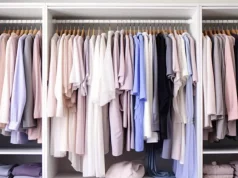
A practical application: build around neutrals. Camel, ivory, grey, navy, forest green, warm brown. These colors work together without effort. They age well in photographs. They read as intentional rather than trend-driven. A capsule of ten neutral pieces in good condition and proper fit will consistently outperform a closet of fifty trendy items from rotating sale racks.
The restraint principle applies to accessories too. One or two considered pieces a simple watch, a thin gold chain, a structured leather bag tend to look more expensive than layering several statement items at once. Less isn’t always more, but in this particular domain, it almost always is.
The Part Nobody Talks About: Your Hands, Your Grooming, Your Skin
Here’s where most style advice quietly stops, and it probably shouldn’t. Clothing is only part of the picture. The person wearing the clothes is more of it.
Hands, specifically, are something people notice without realizing they’re noticing. Hands that are dry and cracked, with chipped nail polish or ragged cuticles, work against everything else you’re wearing. A ten-dollar bottle of hand cream used consistently does more for a certain kind of polished appearance than any single clothing item. Nails that are either well-maintained or bare not halfway there read far more put-together than an expensive outfit attached to neglected hands.
The same logic extends to hair. Not the style so much as the condition. Hair that’s clean, shaped even simply, even inexpensively signals that someone has paid attention. A twelve-dollar haircut that respects your actual face reads better than an expensive style that’s grown out for six weeks past its moment.
None of this requires a spa budget. It requires consistency and the willingness to see yourself as the whole picture, not just the clothes you put over it.
Buying Less, Buying Better, and Unlearning the Clearance Rack Reflex
There’s a psychological trap built into budget shopping: the clearance rack feels like victory. You got it for less. You saved. But saving on something you didn’t need isn’t saving it’s spending. And a wardrobe full of near-misses and compromises, each of which seemed like a reasonable deal in the moment, produces an overall effect that is the opposite of intentional.
The reframe that actually changes things is this: you’re not building outfits, you’re building a visual vocabulary. Every piece should earn its place in that vocabulary. Not by being expensive, but by being right the right fit, the right condition, the right relationship to everything else you own.
This sometimes means waiting. Seeing a specific type of coat you want and not buying the close-enough version this month, but holding out until you find the right one at a thrift store or end-of-season sale. That patience, applied over a couple of years, produces a wardrobe that looks more considered than most things money can buy impulsively.
The irony is that looking expensive usually costs less than trying to look expensive. It costs attention. It costs a slightly longer view. It costs the willingness to maintain what you have rather than replace it.
There’s something almost philosophical in that, if you want to follow the thought where it leads. The things that read as wealth confidence, coherence, care are qualities, not quantities. You can’t buy enough of anything to fake them convincingly. But you can cultivate them, slowly, for almost nothing at all.