
There’s a particular kind of envy that hits when you scroll through home design accounts the ones with sprawling terraces, built-in fire pits, and enough room for a full dining set under string lights. If you live in an apartment with a juliet balcony, a narrow side yard, or a patio the size of a king mattress, that envy can harden into resignation. You tell yourself outdoor living is for people with more space. More land. More luck.
But that logic doesn’t hold up once you start paying attention to how people actually use outdoor spaces. The truth is, most people with large yards use a fraction of them a corner, a strip of shade, one particular chair. The magic of outdoor living has never really been about square footage. It’s about presence. It’s about carving out a place that makes you want to stay outside.
Rethink What “Outdoor Living” Actually Means
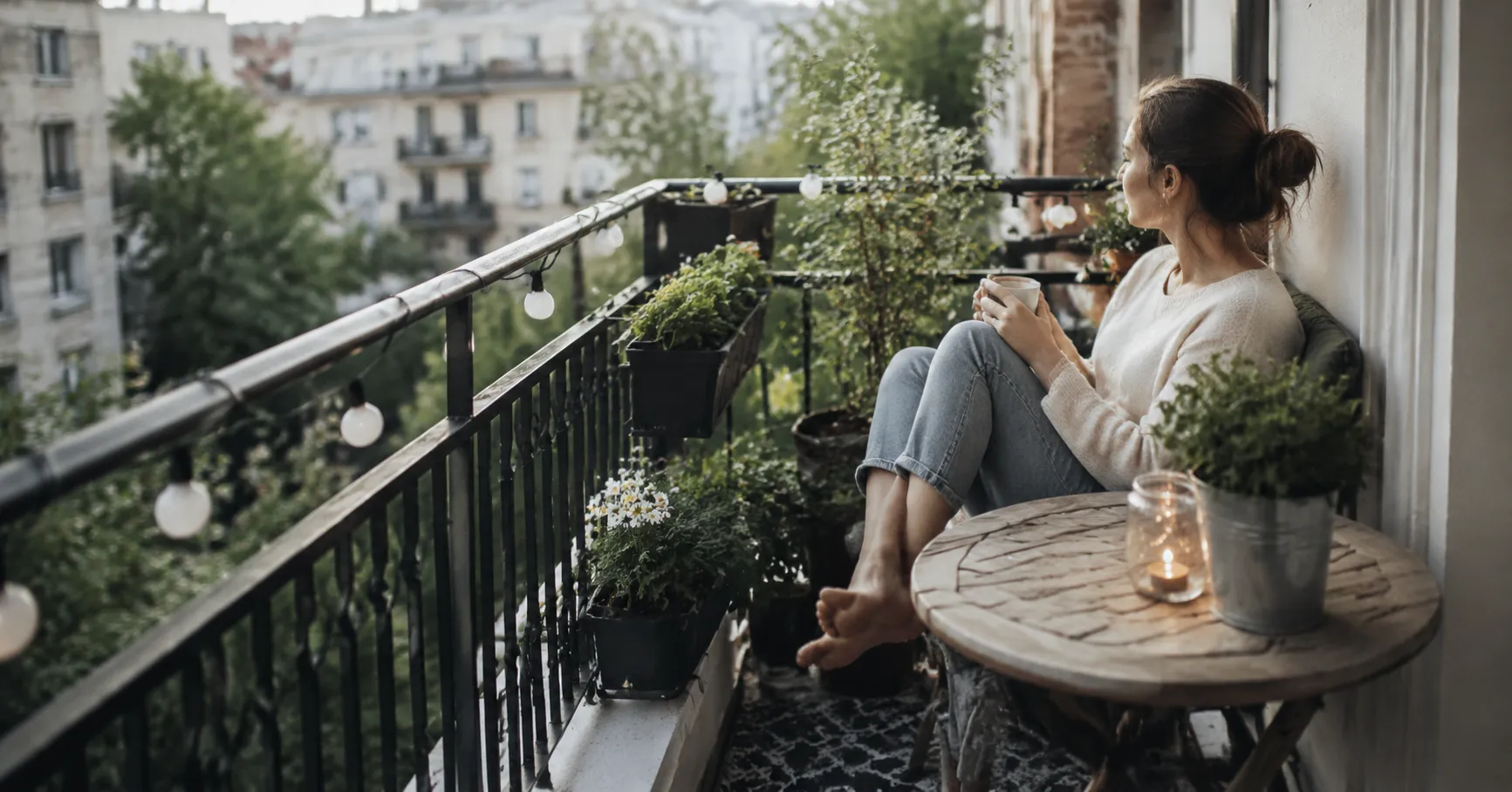
The concept has been badly distorted by real estate staging and lifestyle marketing. A covered pergola over a ten-person dining table is one version of outdoor living. But so is a single well-chosen chair angled toward afternoon light, a small table with a cup of coffee, and the sound of wind in whatever plants you’ve managed to keep alive.
The moment you shed the expectation that your space needs to look a certain way tocount, the possibilities open up. A fire escape with two folding stools and a low planter becomes a genuine retreat. A rooftop corner with weatherproof cushions and a portable speaker becomes somewhere you actually go, not just somewhere that exists between other rooms.
Scale your ambitions to your life, not to a magazine spread. That shift in framing is the first and most consequential move.
Vertical Space Is Your Most Underused Asset
Small outdoor areas suffer most from the instinct to treat them like indoor rooms furniture pushed against walls, floor space guarded jealously. The problem is that once you put a chair, a side table, and maybe a planter down, you’re done. There’s nowhere left to go.
Vertical thinking changes the math. A narrow balcony that feels cramped at floor level can feel abundant once you start building upward. Wall-mounted planters that run in a column from waist height to eye level add greenery without consuming any footprint. A tension rod or railing-mounted shelf creates a surface for candles or a small herb garden without touching the floor. Hanging pendant lights from an overhead beam or ceiling bracket shifts the visual weight of the whole space, making it feel curated and intentional rather than crammed.
There’s also the psychological effect to consider. When a space draws your eye upward through cascading vines, layered lighting, a tall bamboo screen it reads as more expansive than it is. The brain doesn’t just measure rooms by their floor plan.
The One-Piece Rule
Here’s something counterintuitive: small spaces often benefit from one substantial piece of furniture rather than several small ones. The instinct is to scale everything down a tiny bistro table, miniature chairs, folding everything which can make a space feel like a doll’s house. One well-proportioned piece, chosen with intention, anchors the space and signals that it means something.
For a narrow balcony, that might be a proper two-seater bench with storage underneath rather than two flimsy folding chairs. For a small courtyard, it might be a single hammock chair hung from a beam something you actually want to sit in for an hour, not just perch on while you check your phone.
The rest of the space can breathe around that anchor piece. A small side table. A lantern on the ground. Some trailing plants. Once the main piece is right, you don’t need much else.
Plants, Done Strategically
Plants are the fastest way to make a small outdoor space feel alive, but the wrong approach makes them feel cluttered. Twelve small pots of different sizes competing for attention creates visual noise. Three large planters with confident choices a tall ornamental grass, a trailing sweet potato vine, a structural succulent creates something that looks considered.
If you have a wall or fence, a row of identical wall planters spaced evenly transforms a dead surface into a living one. Herbs work well here: basil, mint, thyme. They’re useful, they smell good when you brush against them, and they grow fast enough to feel rewarding.
Think also about how plants can do structural work. A tall planter with bamboo or tall grasses can screen a neighbor’s view or block a unattractive wall without requiring any installation. A row of potted olive trees along a railing creates privacy while maintaining the feeling of openness. In small spaces, every element should ideally be doing more than one job.
Lighting Is the Difference Between a Space You Use and One You Don’t
Most people underestimate how much the right lighting extends the usability of an outdoor space. A balcony that’s fine in the afternoon becomes somewhere you don’t bother going once the sun drops not because it’s cold, but because it’s just dark and kind of bleak.
Solar stake lights tucked into planters, a string of warm-white bulbs looped overhead, a battery-powered lantern on the table these small additions change the atmosphere entirely. Warm light in particular (around 2700K, if you’re looking at bulbs) creates a glow that feels like an invitation. Cool white light, by contrast, feels clinical and tends to make people drift back inside.
Candles work too, obviously. There’s a reason restaurants have used them for decades. A cluster of pillar candles on a low table on a calm evening creates an intimacy that no electric light quite matches. Citronella options pull double duty in mosquito season.
Weather: Work With It, Not Against It
A common mistake in small outdoor spaces is treating weather as an obstacle to be defeated with enough gear shade sails, heaters, windbreaks, bug nets. Some of this infrastructure is genuinely useful, but too much of it turns a small space into an obstacle course.
A better approach is learning which conditions your specific space handles well and building toward those moments. Maybe your balcony is protected from wind but gets full afternoon sun shade from a simple cantilever umbrella and a couple of hours in the late afternoon becomes your sweet spot. Maybe your courtyard stays warm into the evening but gets damp in the morning a weatherproof storage bench keeps cushions dry and makes the morning-to-evening transition effortless.
Working with weather also means being honest about the seasons. In most climates, you have eight or nine months of genuinely usable outdoor conditions if you dress for them and have a blanket nearby. The all-weather obsession trying to make a space comfortable in January rain often leads to ugly, bulky solutions that make the space worse the rest of the year.
Making It Feel Like Somewhere, Not Just Somewhere Else
The spaces that people actually use and return to share one quality that’s hard to quantify but easy to recognize: they have a distinct character. They feel like somewhere. There’s a rug that defines the floor plane, or a particular scent from a jasmine climbing up one wall, or a wind chime that makes a specific sound that you associate with being home.
This character doesn’t require money or square footage. It requires intention. The decision to buy one quality outdoorrug instead of three cheap ones. The deliberate choice of a color palette terracotta and olive and cream, say, instead of whatever was on sale. A small ritual around the space: morning coffee there before the day starts, or a glass of something cold after work while the light changes.
Small spaces, when treated with this kind of care, can end up feeling more intimate and more personal than large ones. There’s less room for the generic. Every choice is visible. That constraint, once accepted, starts to feel like freedom.