
There’s a moment most people recognize, even if they can’t name it. You’re in a room a hotel lobby, a dinner party, an airport and someone walks in wearing nothing obviously expensive, nothing logoed, nothing that announces itself. Yet the room shifts slightly. You look. You keep looking. That’s quiet luxury at work.
The term has spent the last few years migrating from fashion insiders to mainstream vocabulary, accelerated by a certain HBO show and its costuming of old-money restraint. But the aesthetic itself is far older than any trend cycle. It belongs to the lineage of Katharine Hepburn in wide-leg trousers, of Jackie Kennedy in a camel coat, of the kind of dressing that assumes the person wearing the clothes is interesting enough without the clothes doing any talking. It is, fundamentally, an argument that the most powerful statement is the one you don’t make.
What makes it difficult and interesting is that quiet luxury isn’t a capsule wardrobe you can buy in a single afternoon. It’s a sensibility. It demands that you develop an eye for cut, fabric weight, and proportion. Still, there are specific pieces that form its grammar. Get these ten right, and everything else follows.
The Camel Coat
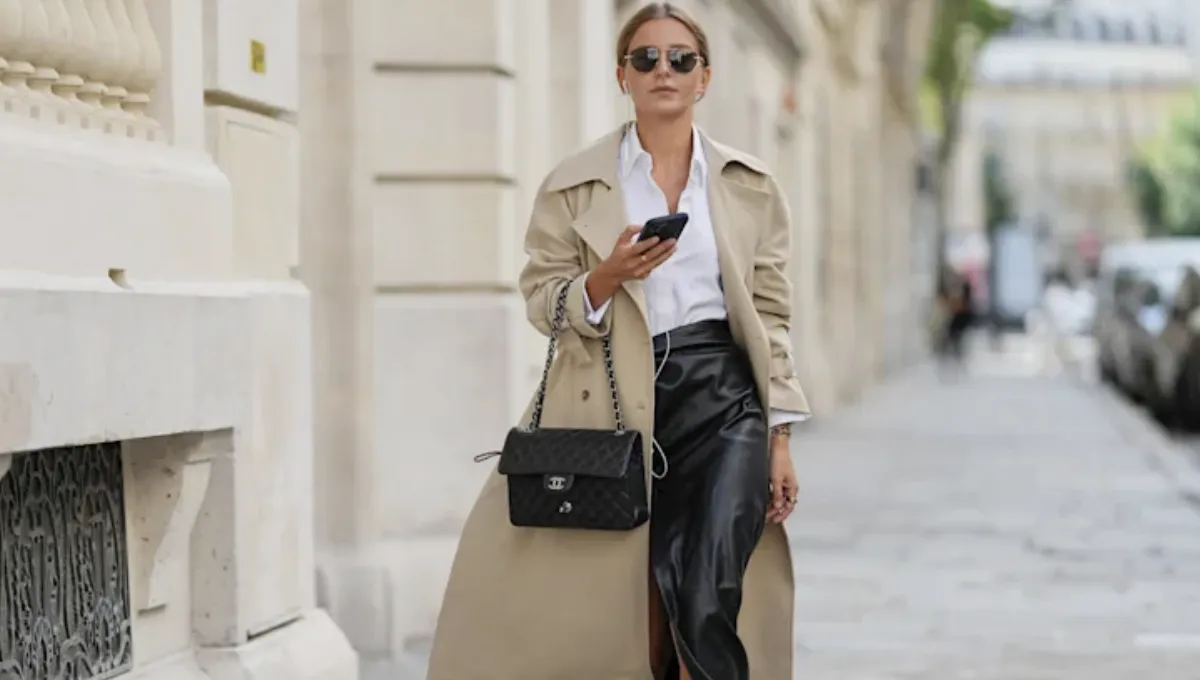
No single piece signals this aesthetic more reliably. A camel coat in a clean, structured silhouette not boxy, not oversized to the point of shapelessness reads immediately as considered and timeless. The color itself does much of the work: camel sits outside trends entirely, neither neutral enough to disappear nor saturated enough to shout.
The fabric matters more than almost anything else here. Wool-cashmere blends drape differently than pure wool; pure cashmere is beautiful but tends to pill under regular wear. A high-quality wool melton or a heavy double-faced fabric will hold its shape through years of use. The silhouette you’re looking for is one with clean lapels, functional buttons, and sleeves that end precisely at the wrist. Nothing oversized, nothing nipped aggressively at the waist. Just line.
Straight-Leg Trousers in Ivory or Cream
The quiet luxury wardrobe is suspicious of black. Black is easy, black hides, black is what you reach for when you haven’t thought it through. The elevated alternative is ivory or cream a shade that requires more intention but rewards it considerably.
A straight-leg trouser in a substantial fabric, heavy crepe or a fine wool, creates a vertical line that is both modern and classical simultaneously. It pairs with almost everything in this list without trying. The key is fit: the break at the ankle should be minimal, the waist should sit at your natural waist or just below, and there should be enough room through the thigh that the fabric doesn’t pull when you walk.
A Cashmere Crewneck
Not a V-neck, not a turtleneck though both have their place. The crewneck in a mid-weight cashmere is the piece that bridges the most contexts. Worn alone with trousers, layered under a blazer, tied over the shoulders on warmer days, it is endlessly adaptable and ages well in a way that most knitwear doesn’t.
Ply matters. A four-ply or five-ply cashmere will hold its shape and resist pilling through years of wear in a way that a two-ply garment simply won’t. The investment is real, but so is the return.
White Oxford Shirt
The white shirt has been written about so many times that it riskscliché, but its presence in this list is non-negotiable precisely because every generation rediscovers it independently. What distinguishes a quiet luxury white shirt from a generic white shirt is weight and construction: a heavier cotton poplin or a subtle Oxford weave, buttons that sit flat and don’t gap, a collar that holds its structure without stiffening.
Wear it tucked, half-tucked, or layered under a cashmere sweater with the collar just visible. It is the piece that makes everything around it look deliberate.
Tailored Blazer in a Neutral
Beige, oatmeal, soft grey, warm brown. A blazer in any of these tones, cut close but not tight, becomes a piece of architecture. It transforms whatever is underneath a simple tee, a silk camisole, the white shirt into something that looks considered.
The construction under the collar is where quality reveals itself. A well-tailored blazer has structure in the shoulders without the rigidity of shoulder pads; it falls smoothly down the back without bunching. When you find one that fits this way, buy it in two colors.
Silk or Silk-Blend Camisole
There’s a specific way that silk moves that no synthetic can replicate, and in this aesthetic, that difference is entirely the point. A silk camisole in ivory, champagne, or a very soft blush works as both an underlayer and, in the right context, a standalone piece. The texture catches light differently throughout the day it has what fabric people sometimes call “hand,” a quality that reads as inherently expensive without any branding required.
Dark Denim, Impeccably Fitted
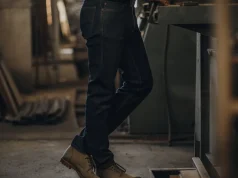
Quiet luxury doesn’t reject denim. It simply insists that denim be treated with the same seriousness as anything else in the wardrobe. A dark indigo or near-black jean in a slim straight or slightly tapered cut not skinny, not wide-leg brings the sensibility into casual contexts without abandoning it. No distressing, no fading, no embellishment. The wash should be even, the hardware minimal.
Loafers in Leather
The shoe almost always determines whether an outfit lands. Loafers particularly a well-made penny loafer or a more architectural sculptural variation are the footwear equivalent of the camel coat. They work with trousers, skirts, denim, and dresses. They carry the aesthetic from morning into evening without asking for much in return.
Leather quality is immediately legible to anyone paying attention. A full-grain leather loafer will develop a patina over time that a corrected-grain or bonded leather simply won’t. It’s one of those cases where the thing that costs more also becomes more interesting the longer you own it.
Wide-Leg Tailored Trousers in Charcoal or Camel
Where the straight-leg trouser is understated, the wide-leg trouser makes a quieter kind of statement it asserts an awareness of proportion, a willingness to commit to a silhouette. In charcoal wool or a camel tweed, it pairs naturally with the fitted cashmere crewneck or a slim oxford shirt tucked in at the waist. The balance between volume below and simplicity above is the whole point.
A Quality Leather Belt, Barely Noticed
The finishing pieces are where this aesthetic either coheres or falls apart. A leather belt slim, in cognac or dark brown, with a simple metal buckle that doesn’t announce a designer is the kind of detail that you notice only in its absence. It closes the loop between top and bottom in a way that a missing belt, or a cheap one, immediately undermines.
This is the logic at the center of quiet luxury: the work is cumulative. No individual piece is doing anything dramatic. Each one is simply correct correct in fabric, correct in fit, correct in proportion. And when you line them up beside each other, the result is something that looks effortless, which is of course the hardest effect to achieve.
The irony isn’t lost on anyone. Looking like you didn’t think about it requires thinking about almost nothing else.