

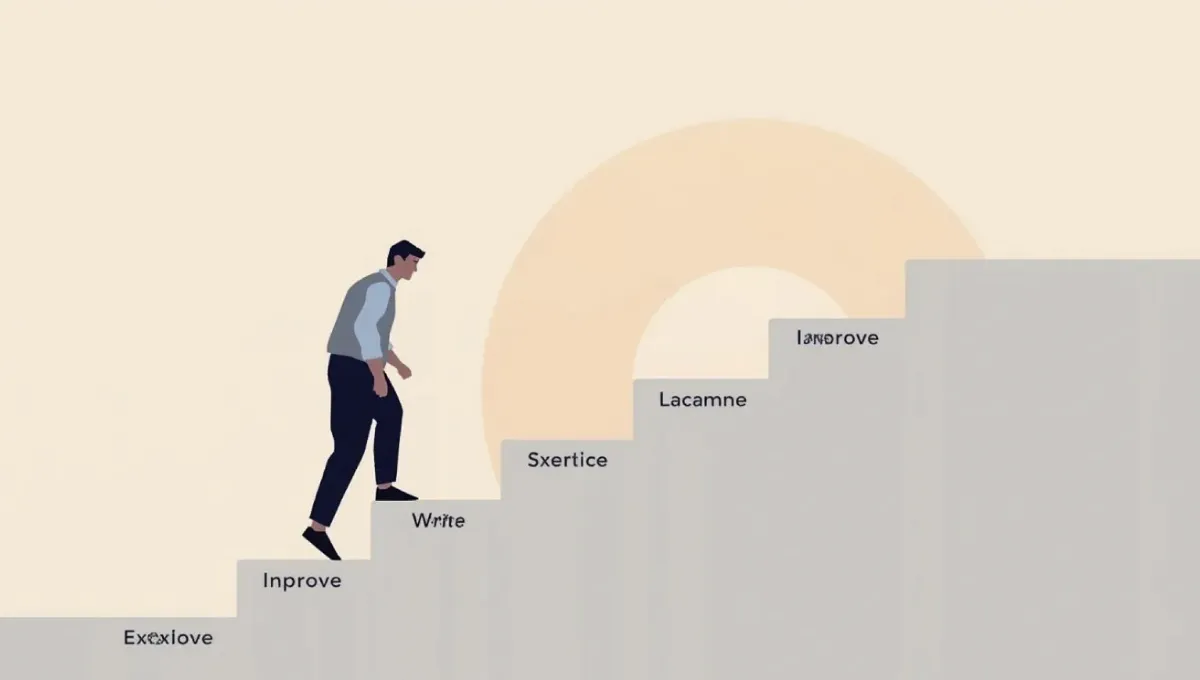
The Lie We Were Sold
Somewhere along the way, we got convinced that the secret to a better life was feeling it first. That if you could just find the right playlist, the right speech, the right moment of clarity at2 a.m. motivation would arrive like a tide, and carry you to wherever you needed to go.
It’s a beautiful idea. It’s also mostly wrong.
Motivation is real. Nobody’s saying it doesn’t exist or that it never helps. But it’s unreliable in a way we rarely admit out loud. It shows up when things are new, when the stakes feel high, when someone just said something that lit a fire under you. And then life gets ordinary again. The alarm goes off. It’s cold. You’re tired. And that feeling the one you were counting on just isn’t there.
What carries people through that gap isn’t motivation. It’s consistency. Not the inspirational poster version of it. The quieter, less glamorous kind. The kind that looks like doing the thing anyway.
Motivation Is a Weather System
Think of motivation the way you’d think about weather. You don’t schedule your life entirely around sunny days. You can’t. Some mornings are overcast for no good reason, and waiting for the sun to show up before you leave the house means you never really go anywhere.
Psychologists have a name for what we tend to do instead: we conflate emotional state with behavioral readiness. We tell ourselves we’ll start when we feel ready, when we feel inspired, when we feel like it. But readiness rarely precedes action. More often, it follows it. You start moving and the motivation catches up not the other way around.
This is why the advice “just get started” sounds almost insultingly simple and yet keeps turning out to be true. A writer who sits down and types even three bad sentences has done something a writer who waits for inspiration has not. Momentum is a product of motion, not of mood.
What Consistency Actually Looks Like
Here’s where the conversation usually goes sideways. People hear “consistency” and imagine some hyper-disciplined person waking at 5 a.m. every day, grinding without complaint, feeling nothing and producing everything. That image is both exhausting and false.
Real consistency isn’t about intensity. It’s about frequency and durability. It’s the person who works out three times a week for three years, not the person who goes every day in January and disappears by February. It’s the entrepreneur who writes one blog post a week, steady, for two years, versus the one who publishes twelve in a burst of enthusiasm and then nothing for six months.
James Clear, in his work on habits, makes the point that the quality of any single effort matters far less than the system behind it. A bad workout still builds the habit of working out. A mediocre writing session still reinforces the identity of being someone who writes. The compounding isn’t in the performance it’s in the showing up.
That reframe matters more than it sounds. It removes the performance pressure from individual days. If today’s work doesn’t have to be great if it just has to happen then the bar for starting drops dramatically. And lowering the bar for starting is the entire game.
The Identity Shift Nobody Talks About
There’s a subtler thing consistency does that motivation never can, and it has nothing to do with productivity or output. It changes how you see yourself.
When you do something once because you were motivated, you did a thing. When you do it repeatedly, over time, through boredom and resistance and bad days, you become someone who does that thing. The distinction sounds semantic. It isn’t.
Identity shapes behavior more reliably than intention does. A person who thinks of themselves as a runner doesn’t need to negotiate with themselves about whether to run today. A person who thinks of themselves as someone trying to get fit does. The former acts from identity. The latter acts from effort. Effort depletes. Identity persists.
Consistency is how you build that identity. Not through declaration but through evidence. Every time you act in alignment with the person you’re trying to become, you cast a small vote for that version of yourself. The votes accumulate. Eventually, the identity is no longer aspirational it’s just accurate.
When Motivation Actually Helps
None of this means motivation is worthless. It’s genuinely useful in two specific moments: at the start of something new, and at inflection points when things have stalled.
A spike of motivation can get you through a door you’d otherwise walk past. It can reignite something that’s gone flat, or push you through a threshold you’ve been circling for weeks. In those moments, lean into it. Use it. But treat it like a match, not a furnace. It starts the fire. It doesn’t sustain it.
The mistake is building your entire system around the expectation of that spark. Designing your life so that it only works when you feel like it is designing a life that mostly doesn’t work.
What fills the rest of the time the 95% that isn’t the dramatic beginning or the crucial turning point is the quiet agreement you make with yourself to keep going regardless. Some people call that discipline. Some call it routine. Call it whatever you want. It’s consistency, and it’s doing most of the heavy lifting.
The Comfort of Low Stakes
There’s something almost liberating about taking motivation off its pedestal. When you stop treating inspired feeling as a prerequisite, the pressure of any given day gets lighter. You’re not chasing a state. You’re just showing up.
Athletes understand this better than most. A professional swimmer doesn’t wait to feel passionate about the 5 a.m. practice before getting into the water. The practice isn’t subject to the mood the mood adapts to the practice. Over time, the ritual itself becomes its own kind of comfort. The consistency becomes the motivation.
That loop is worth understanding. Action generates feeling as often as feeling generates action. If you wait for the feeling, you’re often waiting indefinitely. If you take the action, you give the feeling somewhere to grow.
The Long Game Nobody Watches
Most people never see the years that produced the result they’re admiring. They see the book, not the mornings spent writing badly before eventually writing well. They see the career, not the string of unremarkable days that built it.
Consistency is the work that happens when nobody is watching, when there’s no audience, no immediate feedback, no visible progress. It’s the hardest kind of discipline because the reward is deferred and the effort is daily.
But that’s also exactly why it separates outcomes the way it does. Almost anyone can be motivated when results are visible, when praise is flowing, when the path is clear. Far fewer people show up when none of those things are true.
The gap between who you want to be and who you are isn’t usually a motivation problem. It’s a consistency problem. And the strange mercy of that distinction is that it’s actually solvable not by waiting for something to change inside you, but by deciding, again and again, to go anyway.