

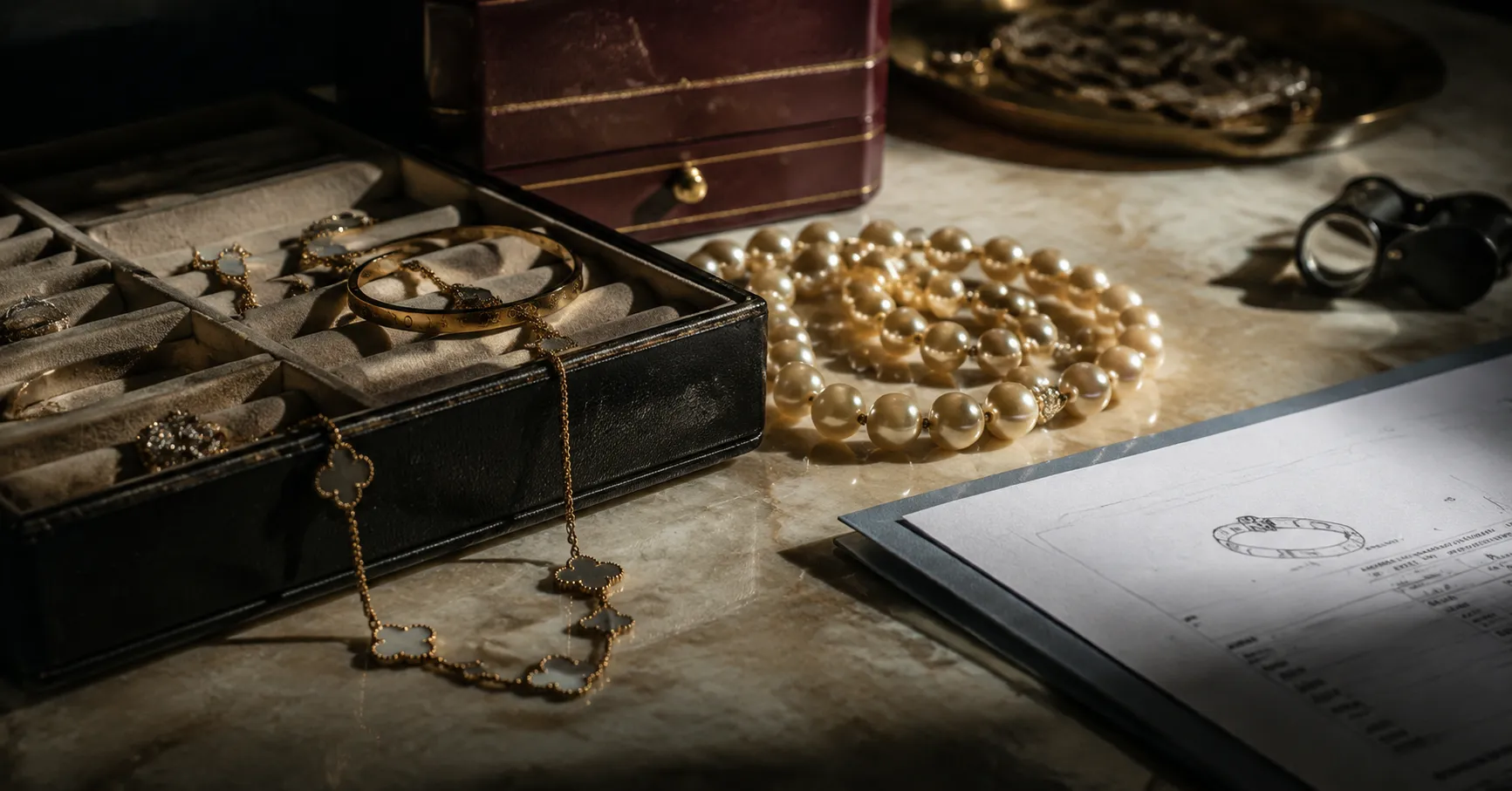
The Truth About “Investment Jewelry” No One Tells You
The Pitch Sounds Reasonable Until You Look Closer
Walk into almost any fine jewelry store, and at some point the conversation will drift toward value. The salesperson polished, unhurried, knowledgeable will mention that certain pieces “hold their value” or even “appreciate over time.” They’ll gesture toward a Cartier Love bracelet, a Van CleefAlhambra necklace, maybe a strand of South Sea pearls. The implication is clear: this isn’t just a purchase. It’s an investment.
It’s a seductive idea. You get to buy something beautiful, wear it, love it, and someday the logic goes sell it for as much as you paid, maybe more. Jewelry as a hedge. Jewelry as a portfolio diversifier. Jewelry as something smarter than splurging on a vacation that disappears.
The problem is that for most buyers, in most situations, this framing is misleading in ways that are rarely spelled out.
What “Investment Jewelry” Actually Means in Practice
The term gets applied to almost everything in the luxury category, which is the first red flag. Investment-grade assets have specific, trackable characteristics: liquidity, transparent pricing, documented return histories. Jewelry, as a category, fails most of these benchmarks.
Take resale. The moment you buy a piece of fine jewelry from a retail store, you lose somewhere between 20% and 50% of what you paid sometimes more. That’s not depreciation over years. That’s the instant gap between retail markup and secondary market reality. A ring that costs $8,000 at a boutique might fetch $3,500 to $4,500 on a resale platform, and that’s if you find a buyer, which takes time and effort most people underestimate.
Auction houses do better, but they come with their own math. Christie’s, Sotheby’s, Bonhams they charge buyer’s premiums that typically run 20% to 26% on top of the hammer price. So even if your piece “sells well,” a significant chunk of the transaction goes to the house. Selling privately requires trust, authentication, and a network that most individual owners don’t have.
The liquidity problem is real and underappreciated. Stocks can be sold in seconds. Real estate is slow but the market is massive and established. Jewelry lives in an awkward middle: not truly liquid, not truly illiquid, but dependent on finding the specific person who wants your specific piece at the specific moment you need to sell.
The Materials Are Not As Stable As You Think
Gold is gold, right? Its value tracks the spot price, which is publicly quoted and globally recognized. That part is real. But the gold in your bracelet is alloyed, shaped, polished, set, and sold at a markup that has nothing to do with spot price. A bracelet containing $400 worth of 18-karat gold might retail for $2,200. If gold prices rise 15%, the intrinsic metal value climbs to $460. Your bracelet doesn’t automatically become worth $2,530.
Gemstones are even more complicated. Diamonds lost a significant portion of their resale mythology when lab-grown alternatives hit the mainstream. Natural diamond prices, particularly for stones under two carats, have dropped meaningfully over the past three years as the market adjusted to a world where chemically identical diamonds can be produced for a fraction of the mining cost. Someone who bought a “hold its value” diamond engagement ring in 2019 is sitting on an asset worth considerably less than what they were told it would be.
Colored stones sapphires, emeralds, rubies follow different dynamics. Certain certified specimens from specific origins (Burmese rubies, Kashmiri sapphires, Colombian emeralds) do carry premium valuations and have shown genuine appreciation at the top of the market. But we’re talking about exceptional pieces with documented provenance, not the pretty blue sapphire halo ring from a mall anchor store.
Where the “Investment” Label Actually Has Some Truth to It
It would be dishonest to say the entire concept is fiction. There are categories where the investment framing holds up, with important caveats.
Signed pieces from historically significant houses Cartier, Van Cleef & Arpels, Bulgari, Tiffany at certaineras do trade with a premium that goes beyond material value. The brand carries cultural weight, collectible status, and a documented auction history. A Cartier Panthère brooch from the 1980s is not the same asset class as a generic gold brooch of equivalent weight. The former has a market of informed collectors. The latter has a market of people who need to melt it down.
Watches occupy a related but distinct space. Certain Rolex references, Patek Philippe complications, and AP Royal Oak models have shown genuine appreciation over extended periods, largely because they combine brand prestige with functional utility and a rabidly active secondary market. But watches are tracked like equities by serious collectors there are price indices, sold comps, specialist dealers. That infrastructure barely exists for most jewelry categories.
High-quality colored diamonds natural fancy yellows, pinks, blues have a genuine investment track record at auction, particularly in the D flawless tier. But the entry price for meaningful specimens starts at six figures and the buyer pool is thin. Treating these as a retail investor’s play is like treating Basquiat paintings as accessible portfolio diversification.
The Psychological Markup Nobody Accounts For
Here’s something the investment framing conveniently ignores: the cost of ownership isn’t just the purchase price. Jewelry needs insurance, typically1% to 2% of appraised value annually. It needs occasional cleaning, prong retipping, clasp replacement, stone tightening. It can be lost, stolen, or damaged and insurance claims often settle below replacement value, not resale value.
More subtly, there’s what might be called the appraisal illusion. Jewelry is frequently appraised at values significantly above what it would actually sell for on the open market. Insurance appraisals in particular are designed to reflect replacement cost at retail, not liquidation value. People see a $15,000 appraisal on a piece they paid $9,000 for and feel they made a smart purchase. In practice, they couldn’t get $7,000 for it tomorrow.
This gap between appraised value and market value is so consistently wide that it has its own industry awareness, but it rarely gets surfaced in the buying conversation. The number feels good. It makes the purchase easier to justify. And jewelers not out of malice, just commercial interest don’t rush to correct the impression.
Why People Keep Buying the Story
None of this means jewelry is a bad thing to own. The experience of wearing something beautiful, the emotional significance of a piece tied to a memory or a relationship, the pleasure of craft and design these are real and legitimate reasons to spend money. They don’t need to be dressed up as financial strategy.
The problem is that the investment framing shifts the psychological basis of the purchase in ways that matter later. A person who bought a bracelet for joy will evaluate keeping it differently than a person who bought it as an asset. When circumstances change divorce, financial pressure, shifting taste the “investment” buyer often discovers the exit is much harder than the entrance.
The honest version of the conversation would sound something like: “This piece is beautiful, it’s well-made, and certain categories at certain price points have shown resilience in the secondary market. But you should buy it because you love it, not because you expect to recoup your money.” That version exists. It just doesn’t close as many sales.
The best jewelry purchases are made without the investment crutch chosen because the piece is exactly right, worn until it becomes part of you, and held without expectation of a return that was never really on offer.