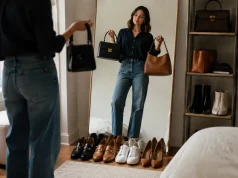

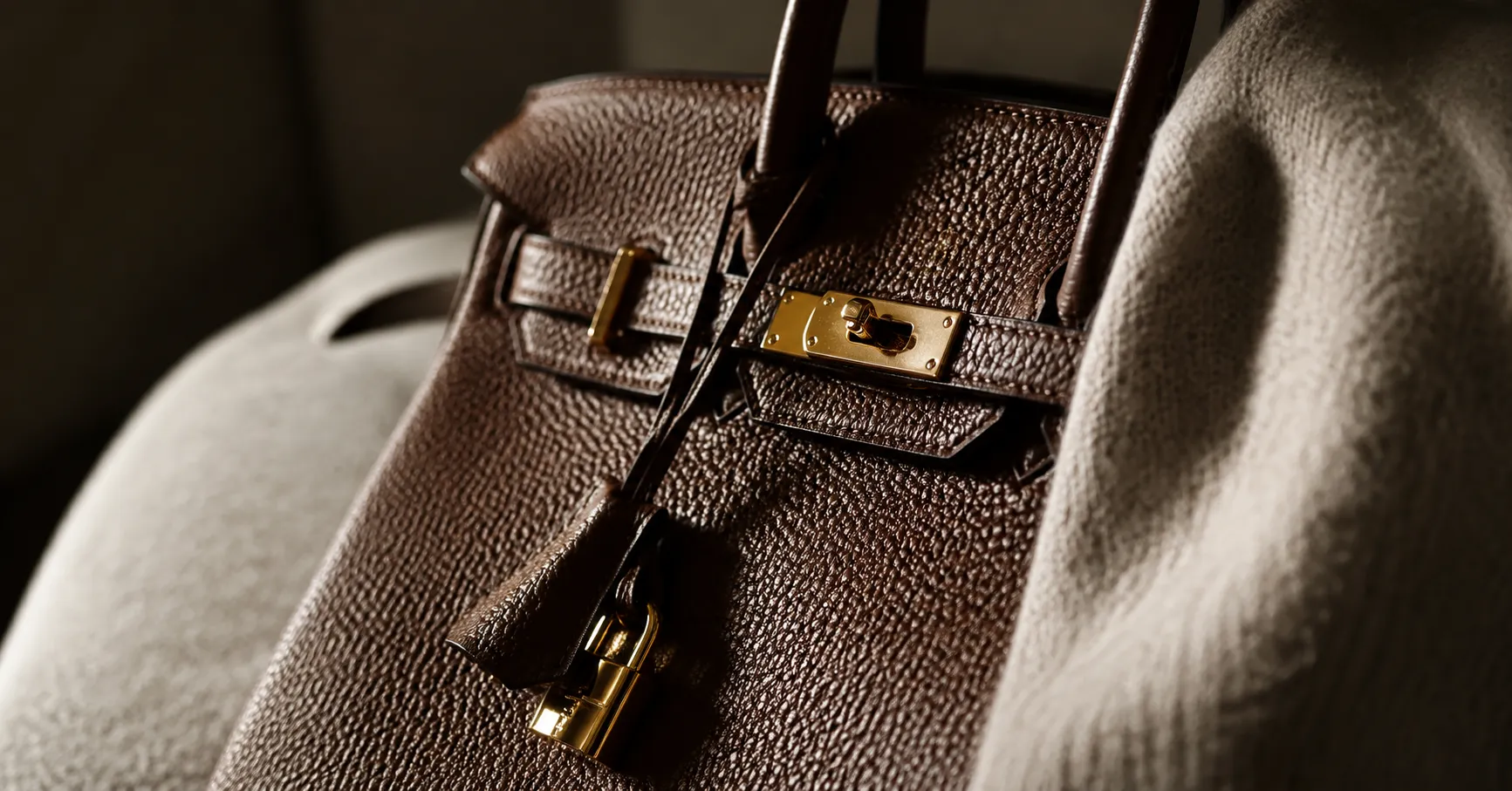
Luxury Bag Styling Tips You Won’t Find on Instagram
There’s a specific kind of advice that dominates the luxury bag conversation online. You’ve seen it a thousand times the flat lay on a marblecountertop, the “what fits in my Chanel” video, the influencer doing a slow pan across a row of Hermès boxes. It’s aspirational content built for engagement, not education. And somewhere in the gap between beautiful imagery and actual styling intelligence, the real craft of carrying a luxury bag gets completely lost.
This isn’t about what’s trending. It’s about what actually works the observations that come from watching how women in Paris, Milan, and Tokyo carry their bags, from studying archival fashion editorials, from understanding why certain pairings feel effortless while others, despite being technically correct, feel hollow.
The Proportion Conversation Nobody Is Having
The most common mistake with luxury bags isn’t color-matching or occasion-mismatch. It’s proportion blindness.
A Celine Nano worn on a tall frame with broad shoulders doesn’t fail because it’s the wrong color. It fails because the bag reads like an accessory that got separated from its owner. Conversely, an oversized Bottega Veneta Jodie in intrecciato leather can look catastrophically overwhelming on a petite frame if it’s carried without deliberate counterbalancing a longer hemline, a streamlined silhouette, nothing competing at the mid-section.
Proportion isn’t just about body type, either, and this is where the Instagram guide runs out of road. It’s about the visual weight of your entire outfit on a given day. A maximalist printed dress doesn’t need a statement bag. It needs a quiet one. A monochromatic all-black look can absorb the drama of a bold structured tote without collapsing under it. The bag isn’t the punctuation mark. It’s part of the sentence.
Start looking at your outfit as a composition with a center of gravity. Where does the eye want to land? If your look already has strong visual weight at the top a voluminous blouse, a bold neckline, layered jewelry a bag worn lower, handled rather than crossbody, redirects attention and creates balance. Small adjustments in carry position change the entire calculus.
Strap Length Changes Everything
The adjustable strap is one of the most underused styling tools in a woman’s wardrobe. Most people pick a length and forget it exists. That’s leaving serious styling leverage on the table.
A bag worn with thestrap at its shortest, sitting high under the arm, elongates the torso and reads formal. The same bag at mid-length, hovering at hip level, feels relaxed and contemporary. Dropped low to the hip crease, it lends a certain downtown nonchalance intentional, unbothered, genuinely chic in a way that the higher carry rarely achieves outside of professional settings.
This matters most with bags that have design versatility the Gucci Marmont, the Loewe Puzzle, the Saint Laurent Loulou. These bags don’t have one correct way to be worn, and designers know it. The styling range is intentional. What you’re seeing in editorial shoots is a director making a conscious choice aboutstrap length to achieve a specific mood. You can make that same choice every morning.
Chain straps behave differently from leather ones. They don’t compress against the body the same way, which means they create more visual separation between bag and outfit. On a heavily textured look cable knit, bouclé, anything with surface complexity a chain strap can create visual static. A smooth leather strap absorbs into the look instead of competing with it.
The Case for Carrying Against Type
Here’s something the algorithm won’t tell you because it’s inherently difficult to photograph: the most interesting styling often happens when you deliberately mismatch the expected register of your bag against your outfit.
A structured ladylike bag the kind with a top handle, a boxy frame, something that reads secretary-chic worn with baggy jeans and a worn-in vintage tee creates a tension that looks completely intentional. The contrast is the point. It signals that you understand both worlds well enough to hold them in one hand. It’s the styling equivalent of being fluent in two languages and code-switching mid-sentence.
The reverse works just as well. A slouchy unstructured bag a raffia Bottega, a soft drawstring Loewe, anything that moves when you walk worn with a sharp tailored suit gives the outfit a looseness that prevents it from reading as corporate. The bag does the relaxing. The suit does the structure. They split the work.
What doesn’t work is accidental mismatching, which is a different thing entirely. Carrying a formal evening bag to a casual lunch isn’t contrast it’s confusion. The difference lies in whether the rest of your look signals that you know what you’re doing. When you carry a cocktail clutch in the daytime, your outfit needs to answer for it. Give it something to answer with.
Color Logic That Goes Deeper Than the Wheel
Neutral bags are the dominant recommendation because they’re safe, and safe is easy to photograph. But the neutrals conversation in the luxury space has calcified into something almost uselessly narrow beige, black, camel, ivory, and the occasional cognac thrown in for warmth.
The more interesting approach is thinking about undertone matching rather than obvious color harmony. Every skin tone, every fabric, every leather finish carries an undertone warm, cool, or neutral. A warm-toned cream bag on a warm-toned complexion in warm-toned camel creates a cohesive visual temperature that reads as effortless without being matchy. A cool-toned dusty lilac Chanel against a cool-toned ivory looks connected even though the colors are different.
This is why certain combinations that look chaotic on a flat lay come alive when worn by an actual person. The skin contributes to the palette. The hair contributes. The lighting of the day contributes. Styling is a living equation, and flat imagery strips most of the variables out.
There’s also the question of finish. A patent leather bag in any color reads more formally than the same color in matte. Shiny hardware reads younger and more playful than brushed or oxidized hardware. These textural cues carry tonal information that color alone doesn’t communicate. Two black bags sitting next to each other can belong in entirely different conversations.
What You’re Actually Buying When You Invest in a Piece
Luxury bags get discussed in terms of investment value constantly, which is both understandable and slightly beside the point when it comes to styling. The more useful framing is cost-per-wear combined with styling range.
A bag with low styling range something so particular in its shape, color, or branding that it only works in specific contexts might be beautiful, but it demands a lot from your wardrobe. You have to build around it, dress to justify it, make sure the rest of the look rises to meet it. That’s not inherently a problem, but it’s worth understanding before you commit.
A bag with high styling range moves across contexts without effort. It works because it has enough visual neutrality in silhouette, color, or texture that it doesn’t dominate every combination it enters. These are the bags that stylists keep returning to not because they’re the most exciting, but because they do the most work.
The quietest bags in your collection are often the ones doing the heaviest lifting.
There’s a woman you’ve probably noticed without being able to articulate why. She’s not wearing the newest season. Her bag isn’t the loudest thing in the room. But something about the way she’s put herself together reads as completely resolved no piece competing for attention, no element demanding justification. That’s not luck, and it’s not money. It’s the result of understanding proportion, context, and the particular intelligence that comes from paying attention to the actual craft of dressing.
Instagram will show you what to want. That’s a different skill from knowing what to do with it.